CIT Sewer Solutions
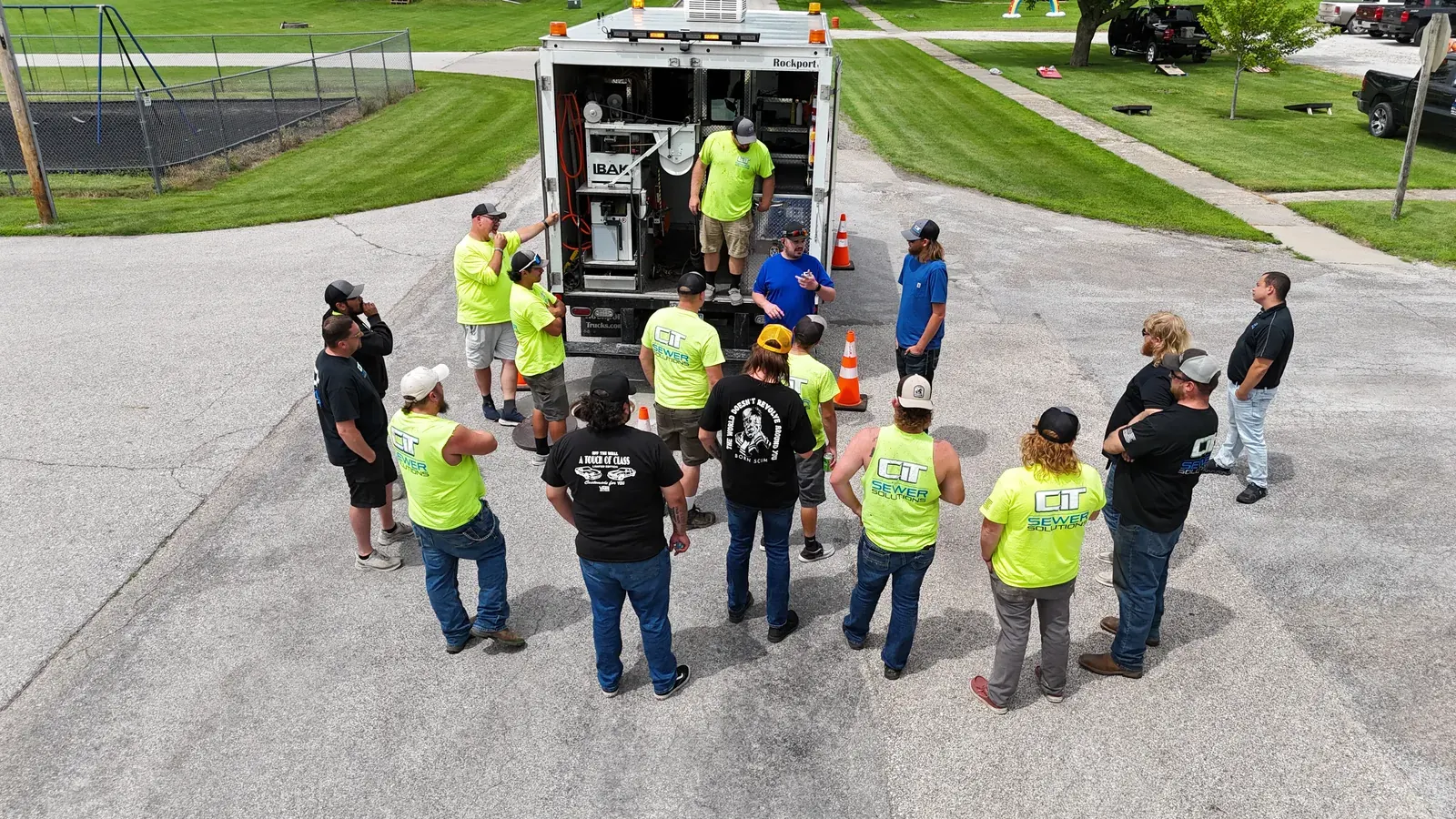
CIT field staff gathered for a group briefing before work begins.

Safety and training

Our crews train for the work your sewer system needs.

CIT Sewer Solutions provides ongoing safety, equipment, and field-procedure training for our crews. Our PACP-certified inspection professionals document visible conditions in your sewer, while your project’s tasks, site conditions, and location determine the additional qualifications and preparation the work requires.

  • Our PACP-certified professionals inspect your sewer.
  • Our crews continue safety and equipment training.
  • Your work requires qualifications matched to its tasks.

Inspection qualifications

We use consistent condition coding to describe your sewer.

When roots, damaged joints, or deposits keep affecting your sewer, useful inspection starts with a clear description of what our cameras see. Our PACP-certified inspection professionals record visible conditions so your staff and engineer can compare the locations needing cleaning, repair, or further investigation.

Your assessment method should fit your assets.

  • PACP provides a common method for coding observed pipe conditions.
  • LACP and MACP address lateral and manhole assessment separately.
  • Our annual maintenance program includes PACP-coded findings and a review with your staff.
NASSCO Pipeline Assessment Certification Program (PACP) logo

Our PACP-certified professionals document your pipe conditions.

Our inspection professionals use NASSCO's Pipeline Assessment Certification Program to code visible pipe conditions for your staff and engineers to review.

Explore sewer inspection options.
NASSCO Manhole Assessment Certification Program (MACP) logo

We document your manhole defects using MACP condition codes.

Our municipal manhole assessment includes the selected MACP Level 1 or Level 2 assessment, so your staff can compare recorded conditions across your manhole inventory.

Explore manhole assessment options.

PACP and MACP are trademarks of NASSCO, Inc.

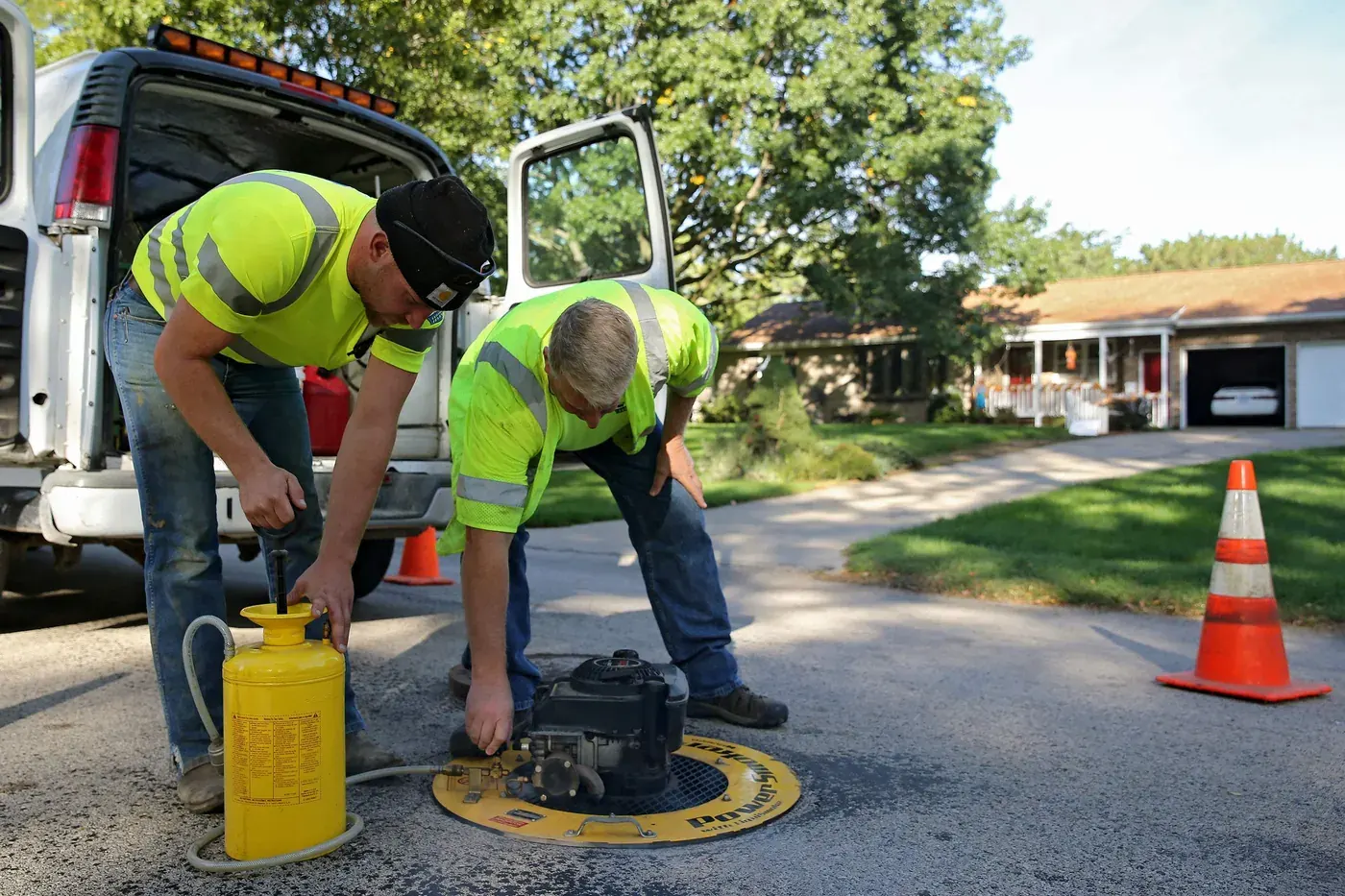
CIT technicians operate a smoke-testing blower at a sewer access point during fieldwork.
Our technicians use a blower during smoke testing to investigate potential entry paths into your community’s sewer system.

Project documentation

Confirm the crew qualifications your sewer project requires.

  1. Identify the sewer assets and tasks in your project.

    Identify your assets, inspection or repair tasks, site hazards, and the authorities responsible for your permits and specifications.

  2. Confirm the qualifications required for each crew role.

    The relevant records need to identify the assigned personnel, training or credential, scope, and current validity for your work.

  3. Keep inspection and installation records with your project files.

    Site arrangements and completed inspection or installation records need to reflect the work actually performed on your assets.

01

Plan for the hazards inside your manhole or wet well.

We can inspect your manhole with a camera lowered from the surface. If your project requires a person to enter your manhole, wet well, or another confined space, the applicable entry requirements must be established before that work begins.

For permit-required entry, the plan must address trained entrants, attendants, and entry supervisors, atmospheric testing and monitoring, isolation, communication, and suitable rescue arrangements. Routine maintenance and construction can fall under different OSHA standards. Information about known hazards in your system is part of that review.

02

Your cleaning and cutting work needs equipment-specific preparation.

Our Vactor trucks remove suitable deposits from your sewer, and our camera-guided Schwalm robots cut suitable hardened obstructions and reopen your connections after lining. Those tasks involve different equipment, controls, and operating hazards.

Training for the assigned equipment needs to cover its operation, inspection, shutdown, and response to abnormal conditions. Your project also needs the appropriate traffic controls, protective equipment, and exposure review. If an inspection reveals a suspected utility crossing through your sewer, the affected utility owner must direct the response before removal work proceeds.

03

Your repair records document the installation and completed sewer.

We install point repairs at isolated defects in your sewer, connection liners where your laterals join your main, and UV-cured lining along deteriorated runs in your system. Each repair requires suitable pipe conditions. The selected material and installation system determine the relevant installer training, handling requirements, and project acceptance criteria.

Our point and connection repair work includes CCTV before and after each repair. Our UV lining work includes monitored curing, installation documentation, cure records, and final CCTV. These records show the work performed on your sewer and support your engineer’s review against your project specifications.

04

Check the permits and crew qualifications required at your project location.

CIT serves projects in Iowa, Minnesota, Missouri, Nebraska, Arkansas, and Colorado. Our local county coverage also includes Union County, South Dakota. Your work address and scope determine the applicable contractor registration, trade licensing, permits, and owner requirements.

For example, Minnesota recognizes a certified pipelayer pathway for qualifying exterior piping work within your facility’s property lines. Missouri requires OSHA 10 construction training or an accepted alternative for on-site contractor employees on covered public works construction. Iowa and Nebraska have contractor registration requirements, while Arkansas commercial licensing depends on the covered work and contract. Colorado sewer work also requires review of the local authority’s rules. These requirements apply according to your actual project.

05

Plan utility access, traffic controls and material handling for your site.

If we need to excavate beside your buried infrastructure, your work requires the applicable utility-locate process and excavation permissions. If our work area affects traffic, the road authority’s requirements govern the traffic-control arrangement. Truck assignments also need the appropriate driver qualifications for the actual vehicle and load.

For cleaning at your facility, recovered material needs an authorized handling and disposal arrangement. Resin, grout, smoke, and dye products require review of their actual safety information. Your staff can help establish access, operating restrictions, known hazards, and coordination with your other contractors before fieldwork.

Understand the qualifications your project needs.

What does PACP certification mean for our inspection?
PACP is NASSCO’s Pipeline Assessment Certification Program. It trains inspection professionals to describe observed pipe conditions using a consistent coding method. CIT has PACP-certified inspection professionals. NASSCO requires recertification every three years; the relevant personnel and coding requirements should match your inspection scope.
Does PACP also cover our lateral and manhole assessments?
NASSCO has separate LACP and MACP programs for lateral and manhole assessment. PACP does not automatically establish either additional credential. Our municipal manhole assessment package includes your selected MACP Level 1 or Level 2 assessment, models or point clouds, shareable reports, GIS-ready data, and technician review. The assessment level describes the inspection detail; it is not a separate personnel certification rank.
Does an OSHA 10 card qualify someone for every task at our site?
An OSHA Outreach card records course completion. OSHA does not describe it as a certification, and the course does not replace training required for a worker’s specific duties. Your project may separately require entry-role training, equipment competence, a particular trade credential, or other qualifications.
Can our organization discuss qualification records before work?
Yes. Share your required credentials, site orientation, inspection standards, and contract requirements with CIT. We can discuss the records relevant to your proposed work and the qualifications your project specifies.
Is this a public certification course?
This page describes our internal training and the qualifications relevant to your project. For NASSCO certification courses and credential verification, use NASSCO’s education and training resources.

Talk with our team.

Discuss the crew qualifications required for your sewer project.

Tell us your project location, whether you need sewer inspection, cleaning or repair, and any crew qualifications or site training your organization requires.

Call 515-434-2248