CIT Sewer Solutions
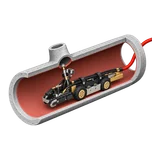
An illustration of a robotic cutting head working against a protruding connection inside a pipe.

Robotic cutting

Our advanced sewer robotics remove obstructions and reopen your lateral connections.

We cut protruding taps, roots, concrete, and hardened repair material from inside your sewer main. Our camera-guided robots clear obstructions that can catch debris, restrict flow, or block inspection and lining. After lining, we reopen your lateral connections so they can return to service.

  • We remove protruding taps and hardened obstructions.
  • We reopen your lateral connections after lining.
  • Our operator guides the cutting by CCTV.

Discuss your sewer obstruction.

We use your details to respond to your inquiry. You can submit it with internal analytics turned off. Read our Privacy Policy.

Illustration of a camera-guided cutting robot reopening a lateral connection through the liner of an open sewer main, with its supply hose exiting the rear.

How we help

We cut the obstructions that cleaning alone cannot remove.

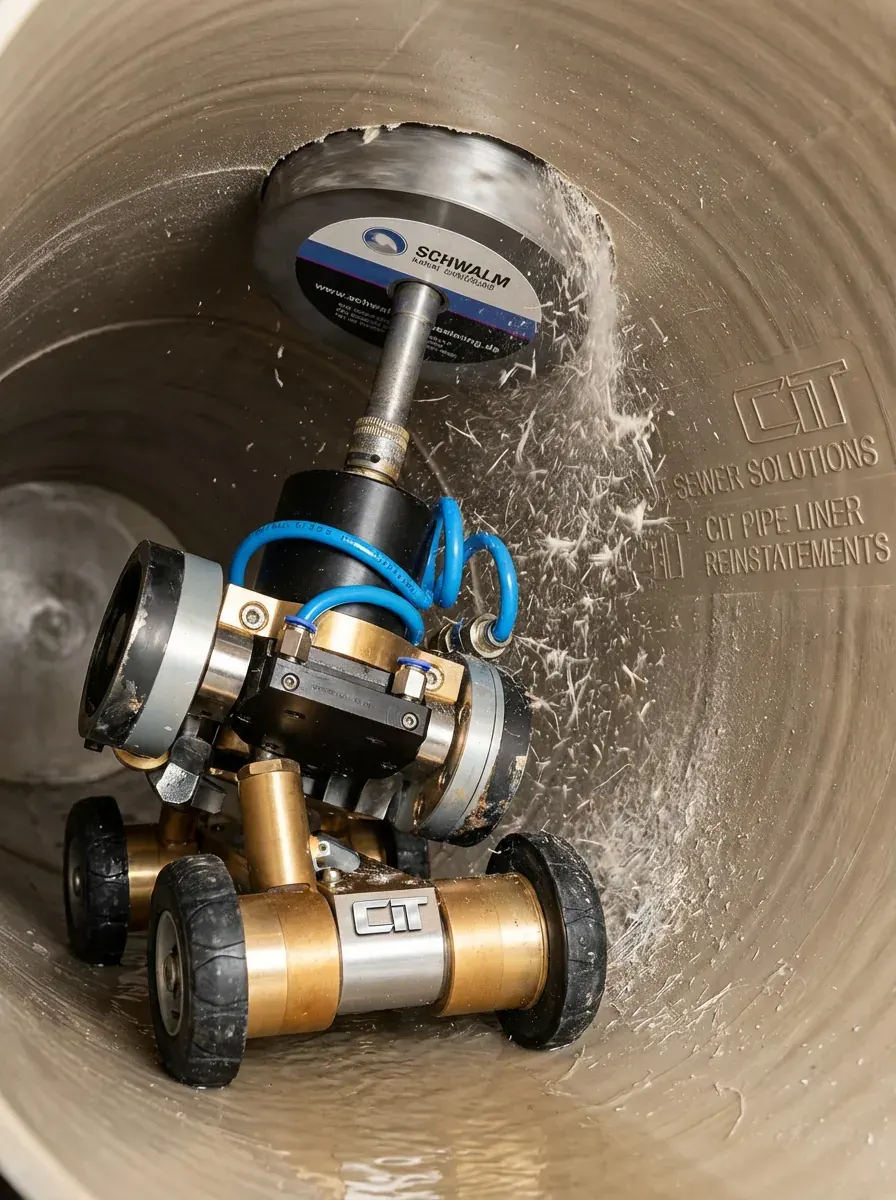
A tap projecting into your sewer main can catch debris. Concrete, hardened resin, or failed liner material can block a camera or prevent lining. Our Schwalm robot carries grinding, chisel, and water-jet attachments so we can tackle those obstructions from inside your pipe. The camera lets our operator see the cutting area throughout the work.

Our robotics support your maintenance and lining work.

  • We cut back protruding taps that catch debris or restrict your main.
  • We remove suitable roots and hardened material blocking your inspection or repair.
  • We prepare your sewer main for lining by removing internal obstructions.
  • We reopen your lateral connections through the installed liner and check the openings with CCTV.
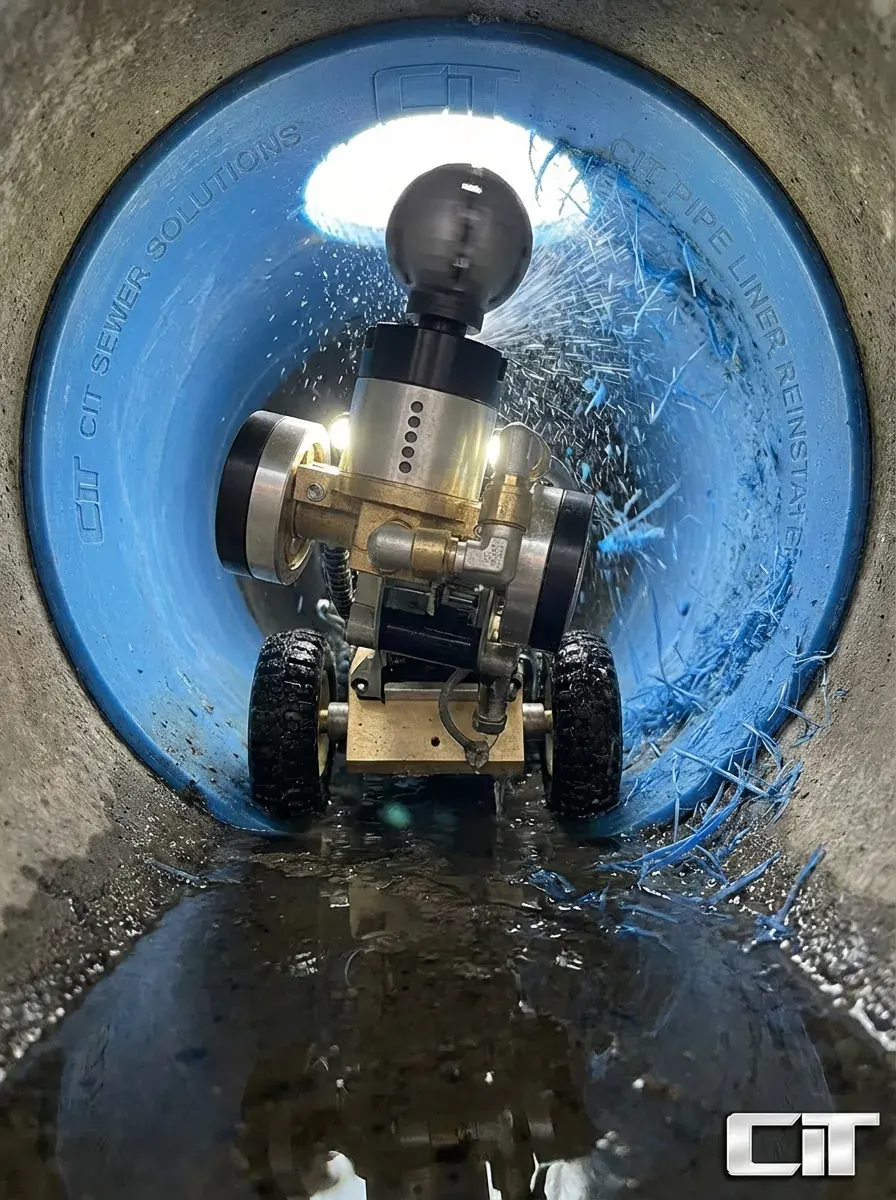
An illustration of a robotic cutter positioned inside a lined pipe to remove an obstruction.
This illustration shows a robotic cutter positioned inside a lined pipe.Service illustration

We inspect, cut, and check your sewer under camera guidance.

  1. We inspect the obstruction inside your main.

    We review CCTV to see the obstruction, its position, and the surrounding pipe wall. This shows what needs cutting and whether deterioration limits the work.

  2. We select the cutting attachment.

    Grinding, chisel, and zero-degree water-jet attachments address different materials. For water cutting, a separate jetting unit supplies the nozzle carried by our Schwalm robot.

  3. We remove the obstruction or reopen the connection.

    Our operator guides the tool by camera to cut the affected area. Before lining, we remove obstructions; after lining, we cut the openings needed to reinstate your lateral connections.

  4. We check the completed cutting with CCTV.

    The camera shows the cleared area or reopened connection. You and your lining contractor can see the completed work before the project continues.

What you receive

You can see the cleared area and reopened connections.

CCTV records the area we cut, including lateral openings through your new liner. You can review the completed cutting alongside the inspection that identified the work.

  • After obstruction removal, the camera can inspect the accessible run beyond the cleared location.
  • Your lining contractor can see the pipe preparation completed before installation.
  • Post-cutting footage shows your reinstated lateral openings.

Who This Is For

We work with rehabilitation and inspection project teams.

  • Your maintenance team needs to address a suitable obstruction in its sewer assets.
  • Your lining contractor needs pipe preparation or lateral reinstatement.
  • Your engineer needs records of the prepared area for the next project stage.

01

Our water-jet tooling cuts hardened material inside your sewer.

Our separate jetting unit supplies the robot-carried zero-degree nozzle with water pressure up to 40,000 psi. That configuration lets us cut demanding material such as concrete, hardened resin, and failed liner. The described cutting range is 6 to 24 inches; pipe condition and access determine where we can use it.

We can operate from one manhole where the run and access allow it. Working inside your sewer can reduce excavation above the obstruction. A weakened pipe wall can limit cutting, and damage remaining after removal may still need repair.

02

We investigate suspected utility intrusions before any removal work.

If your footage shows a possible gas or electrical line crossing your sewer, tell us when you contact CIT. We can inspect the suspected intrusion and record it for the affected utility owner.

The utility owner must govern identification and the response. A suspected active utility is not a routine obstruction to cut or clean out.

01

Find your project location in our service area.

We serve municipal, commercial and institutional sewer projects in Iowa, Minnesota, Missouri, Nebraska, Arkansas and Colorado. Tell us where your sewer is located and which assets need inspection, maintenance or repair so we can discuss the project requirements and scheduling.

Our local sales territories cover all 99 Iowa counties, six eastern Nebraska counties and Union County, South Dakota. The territory pages list their communities, counties and CIT contacts. For projects elsewhere in our six-state service area, use the full service-area page.

Understand how we prepare your sewer assets.

What can robotic cutting remove?
We use camera-guided tooling to remove suitable protruding connections, roots, hard deposits, and lining material at connections that need reopening within your sewer assets.
What size pipe does this work in?
Our water-jet cutting configuration works in suitable sewer pipes from 6 to 24 inches in diameter. Tool selection also depends on your obstruction material, position, and pipe condition.
We think something is a utility line running through our sewer. Can you cut it?
A suspected utility intrusion requires coordination with the affected utility owner. It must not be treated as routine cutting or cleaning. We can inspect your accessible sewer assets and document visible evidence for that review.
Is cutting needed before lining?
Your pipe may need protruding connections or hard deposits removed before lining. Inspection helps identify the preparation needed within your affected segment.

Discuss cutting or lateral reinstatement.

Discuss cutting or lateral reinstatement for your sewer.

Tell us about the obstruction in your sewer or the lateral connections that need reopening after lining. Include your pipe dimensions, project stage, and available footage. Mention any suspected utility intrusion so the affected utility owner can direct that response.

Call 515-434-2248