CIT Sewer Solutions
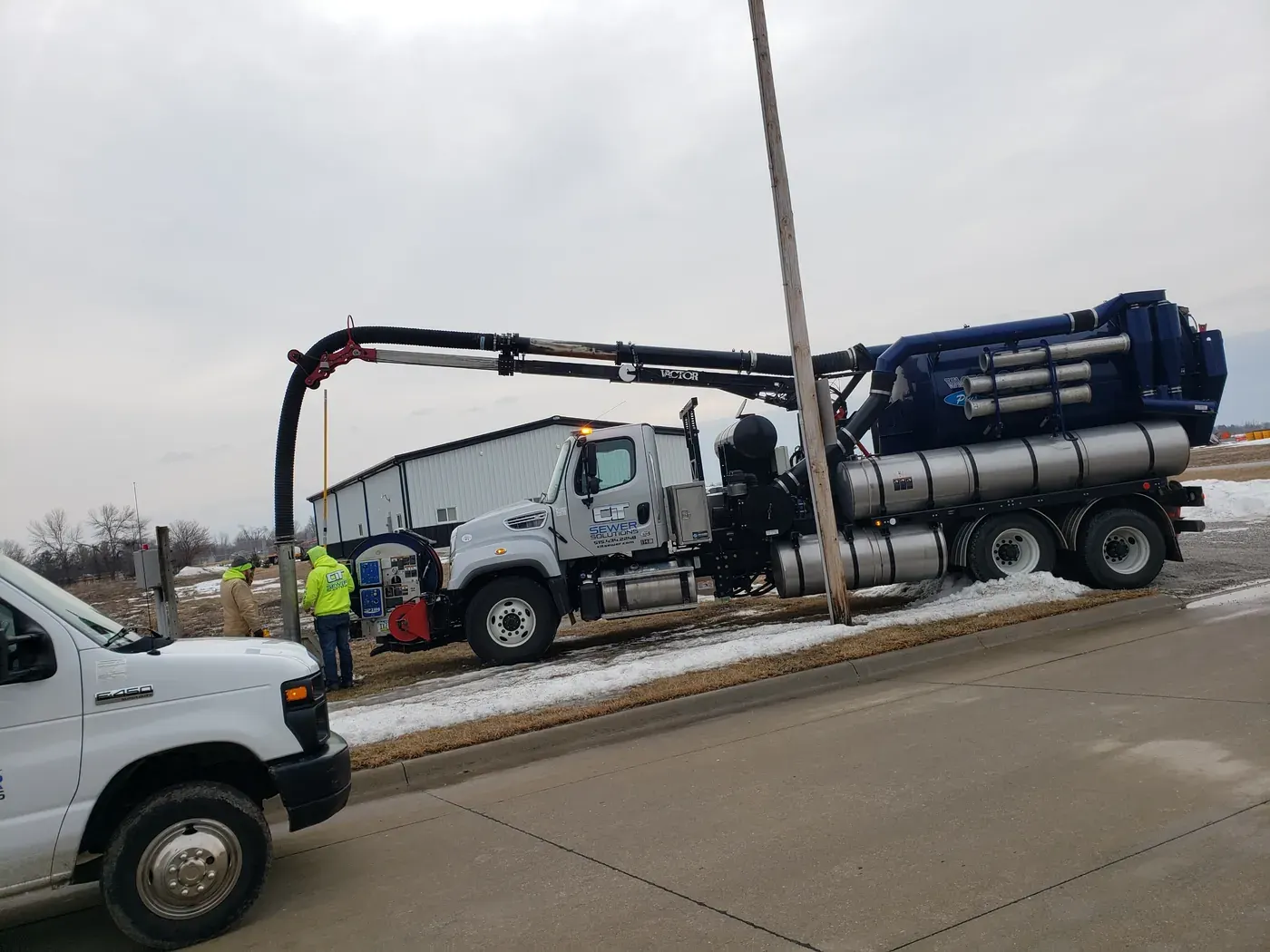
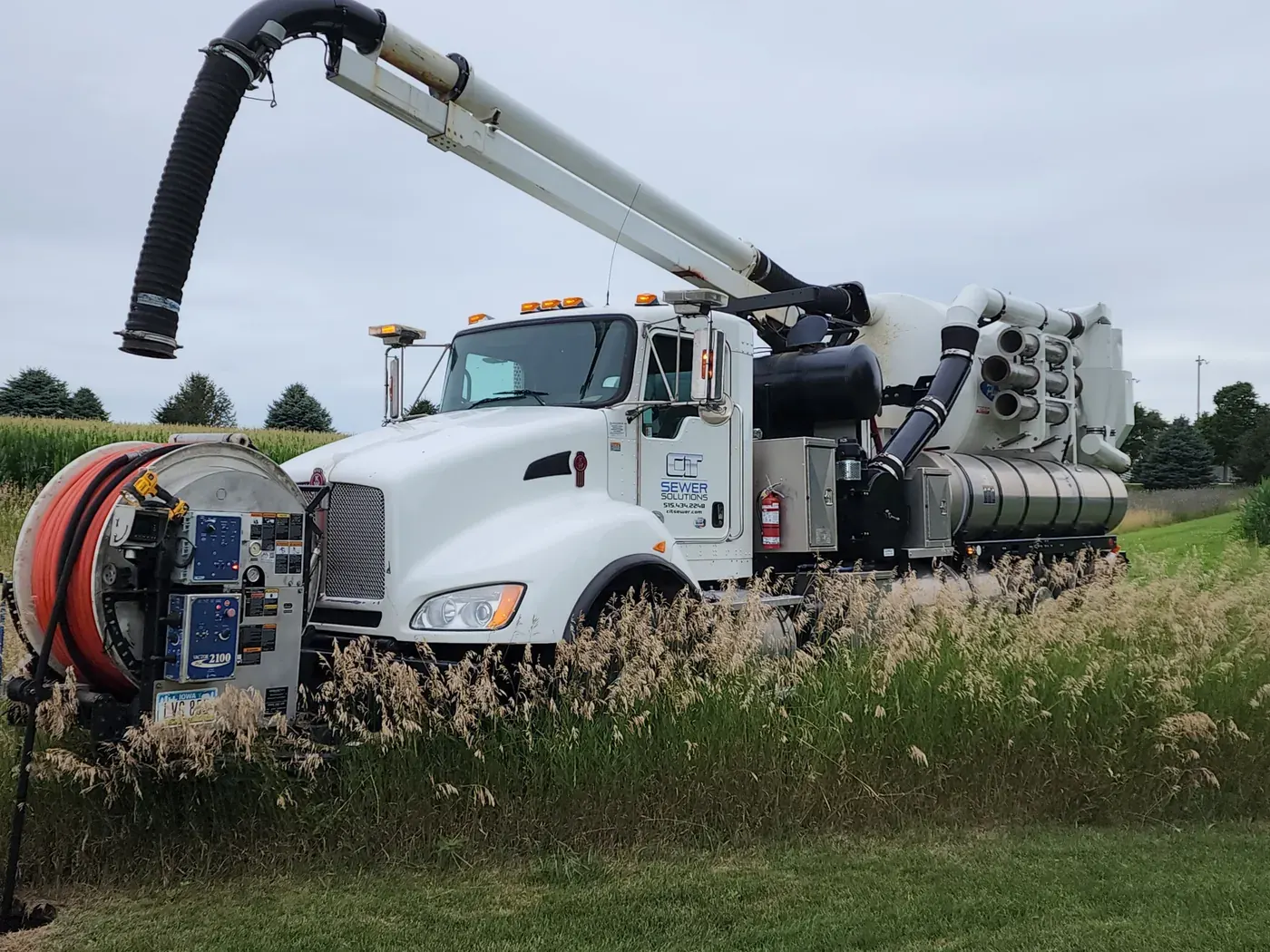
A CIT combination truck positioned in the field with its vacuum boom extended.

Cleaning & Jetting

We remove the buildup restricting your sewer.

Our crews use Vactor jetting and vacuum equipment to remove grease, grit, sediment, and other suitable deposits from your sewer. We clean affected runs and structures, recover accumulated material where needed, and prepare your pipe for camera inspection or rehabilitation.

  • Our crews clean sewer mains and treatment structures.
  • Jetting loosens deposits; vacuum equipment recovers material.
  • We provide one-time and scheduled cleaning.

Discuss your sewer cleaning.

We use your details to respond to your inquiry. You can submit it with internal analytics turned off. Read our Privacy Policy.

Illustration of a combination sewer-cleaning truck with a vacuum boom and hose reel, connected to a jetting nozzle loosening deposits inside a sewer cutaway.

Jetting and vacuum recovery

We loosen deposits and recover the material from your sewer.

Our jetting hose and nozzle direct water against buildup inside your pipe. The water dislodges suitable deposits and moves them toward an accessible collection point, where vacuum equipment can recover the accumulated material. Our crew selects the cleaning approach for your pipe condition, deposits, flow, and access.

We address the material restricting flow or hiding your pipe wall.

  • We remove suitable grease, grit, and sediment from affected runs.
  • We cut roots with the method appropriate to your pipe and its root intrusion.
  • Our robots can cut suitable hardened obstructions that remain after cleaning.

Jetting and inspection illustrations

See how our jetting nozzle moves material through your sewer.

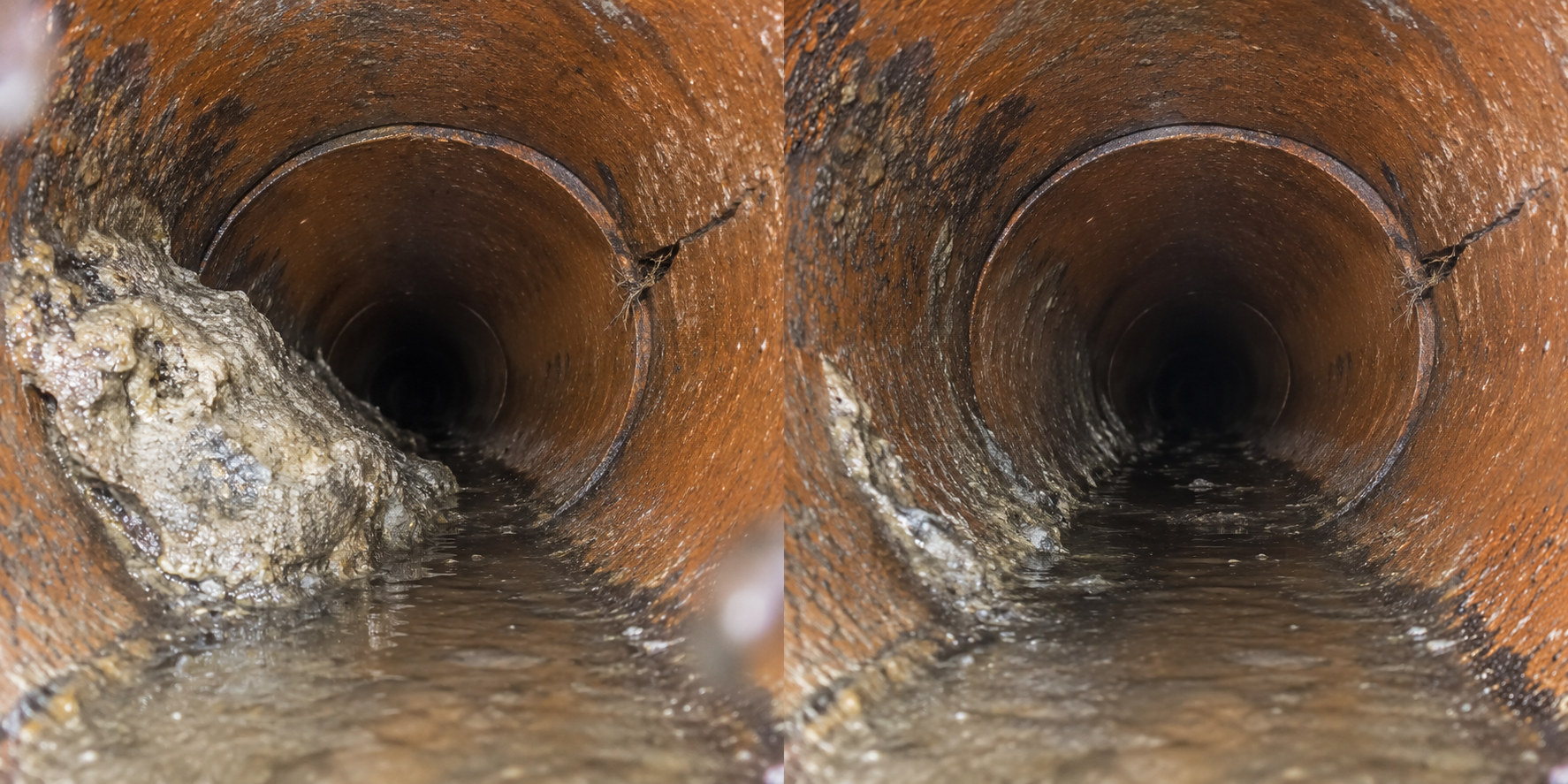
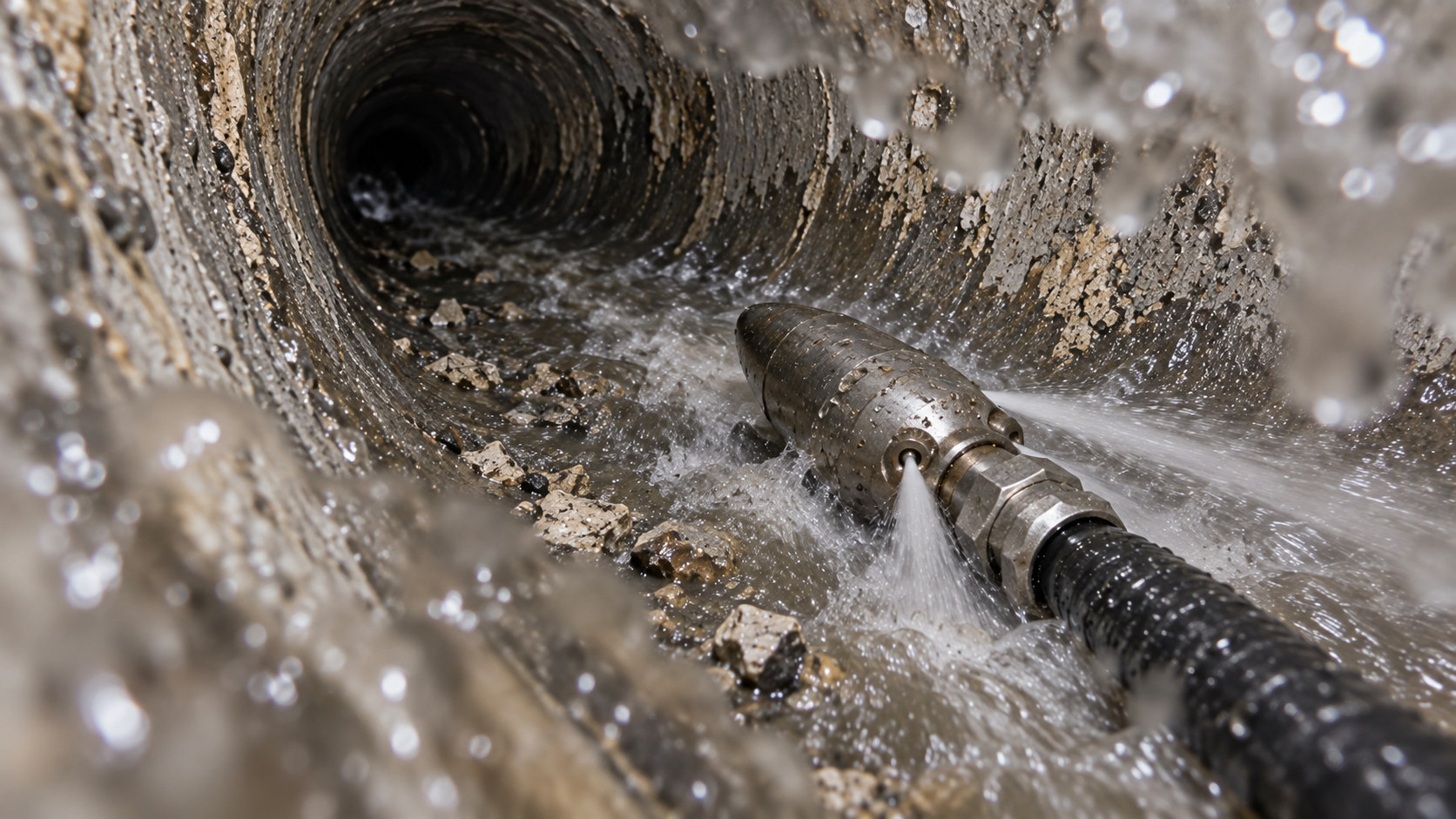
These illustrations show a nozzle flushing suitable deposits and loosened debris back through the pipe. The inspection comparisons show the conditions before and after removal. Roots and hardened obstructions can require cutting before the flushing pass.

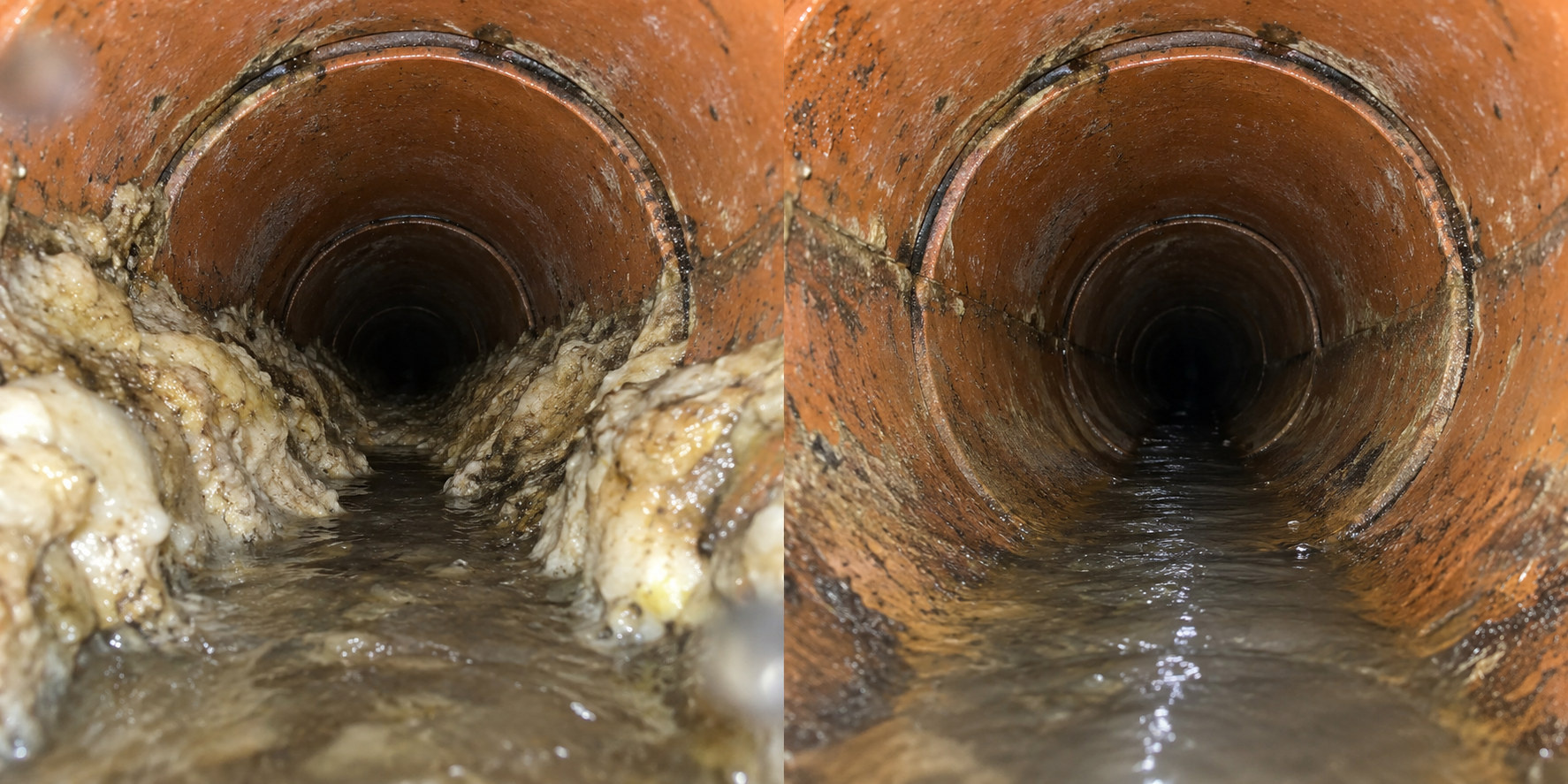
Before removalAfter grease removal
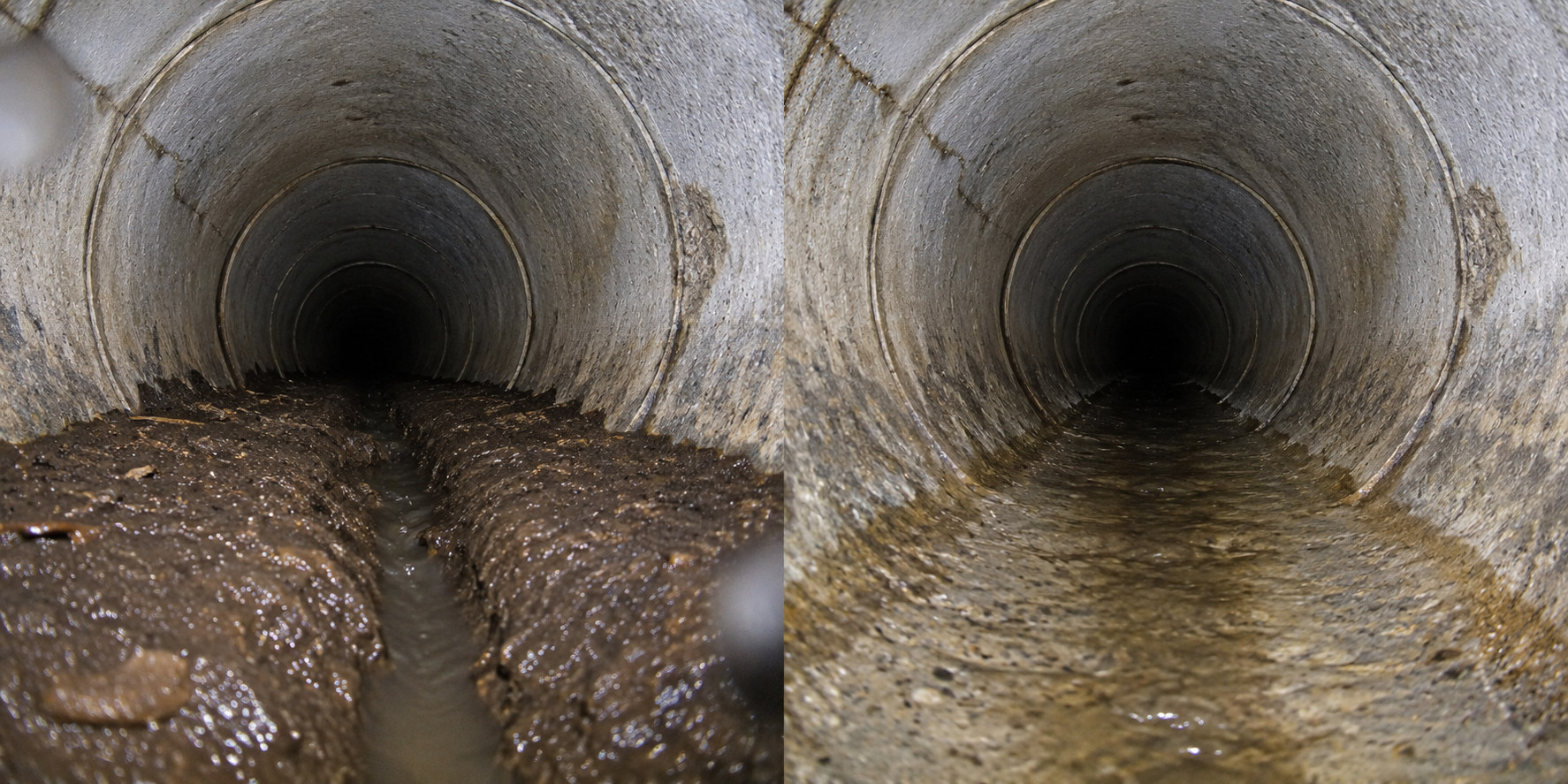
Condition illustration: grease before removal at left and after grease removal at right, with the original pipe surface and joints retained.
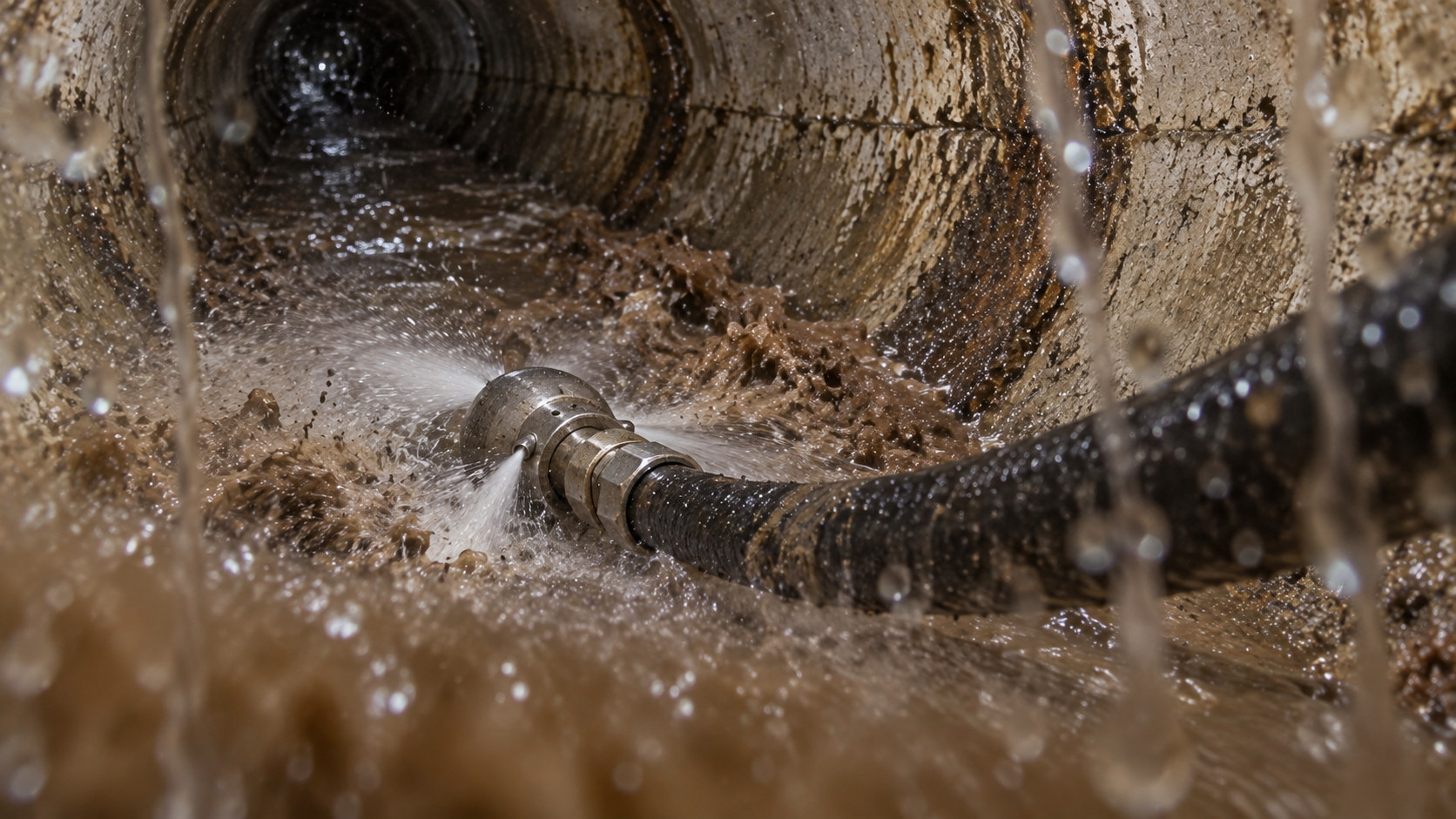
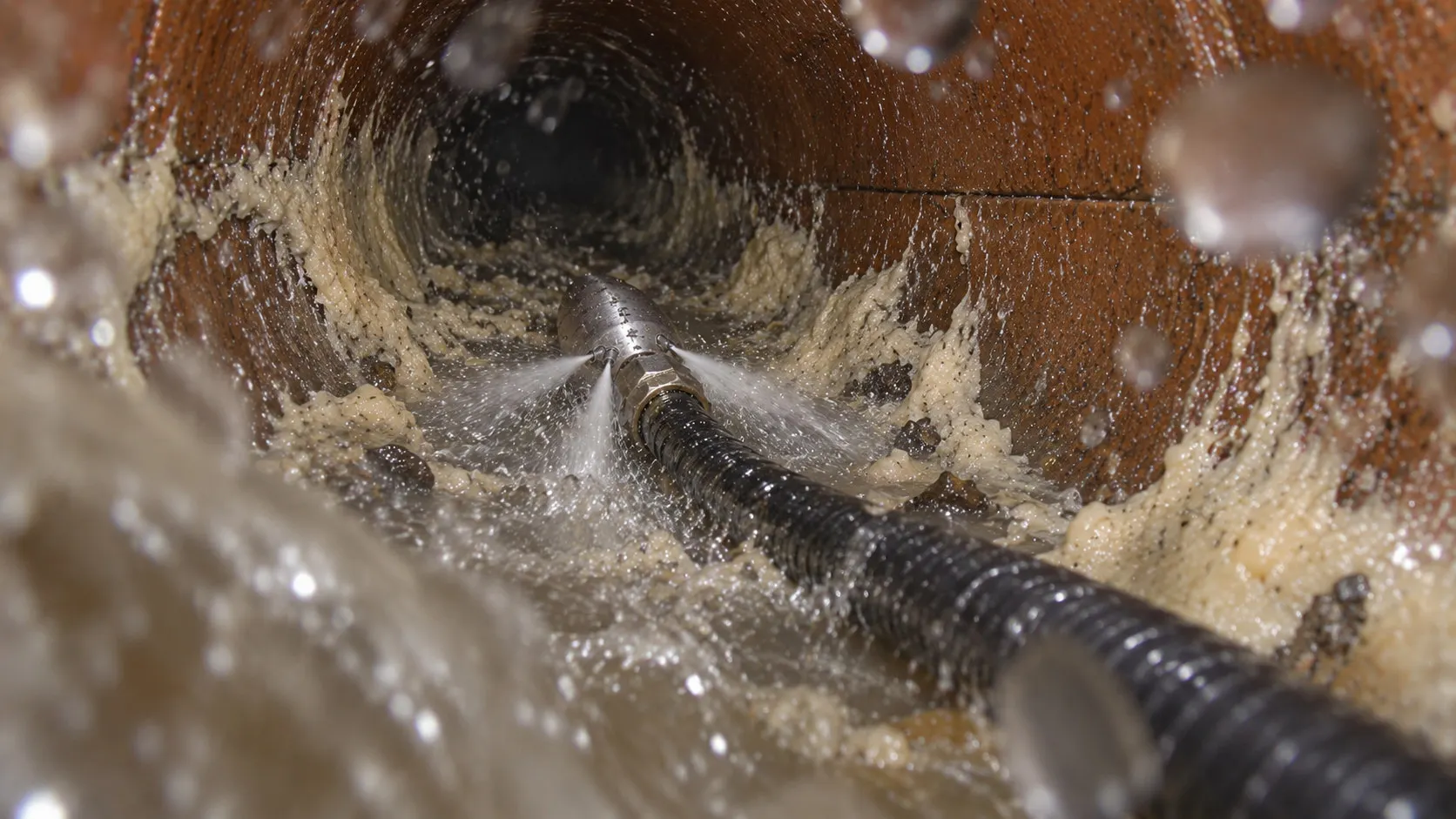
Service illustration: The nozzle flushes loosened grease back along the pipe toward an accessible recovery point.
The nozzle flushes loosened grease back along the pipe toward an accessible recovery point.

01

We remove grease that narrows your sewer.

Grease can collect along your pipe wall and trap more material. Our crew breaks up suitable deposits with the cleaning method the buildup requires, then moves and recovers the loosened material where needed.

The exposed wall lets us check whether grease remains around your joints and connections. Cleaning removes the deposit; it does not change the pipe material.
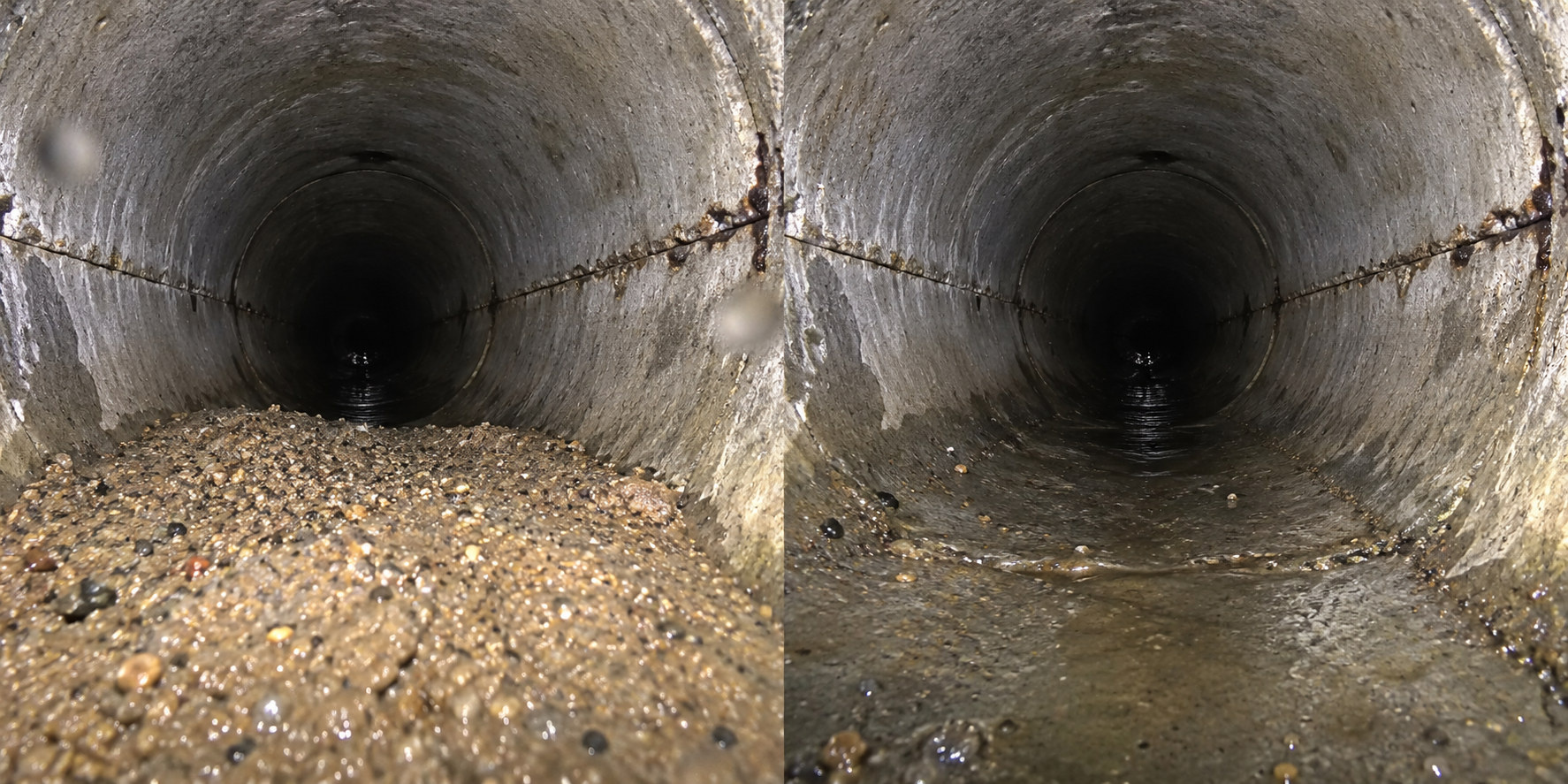
Before removalAfter sediment removal
Condition illustration: sand grit before removal at left and after sediment removal at right, with the original pipe surface and joints retained.
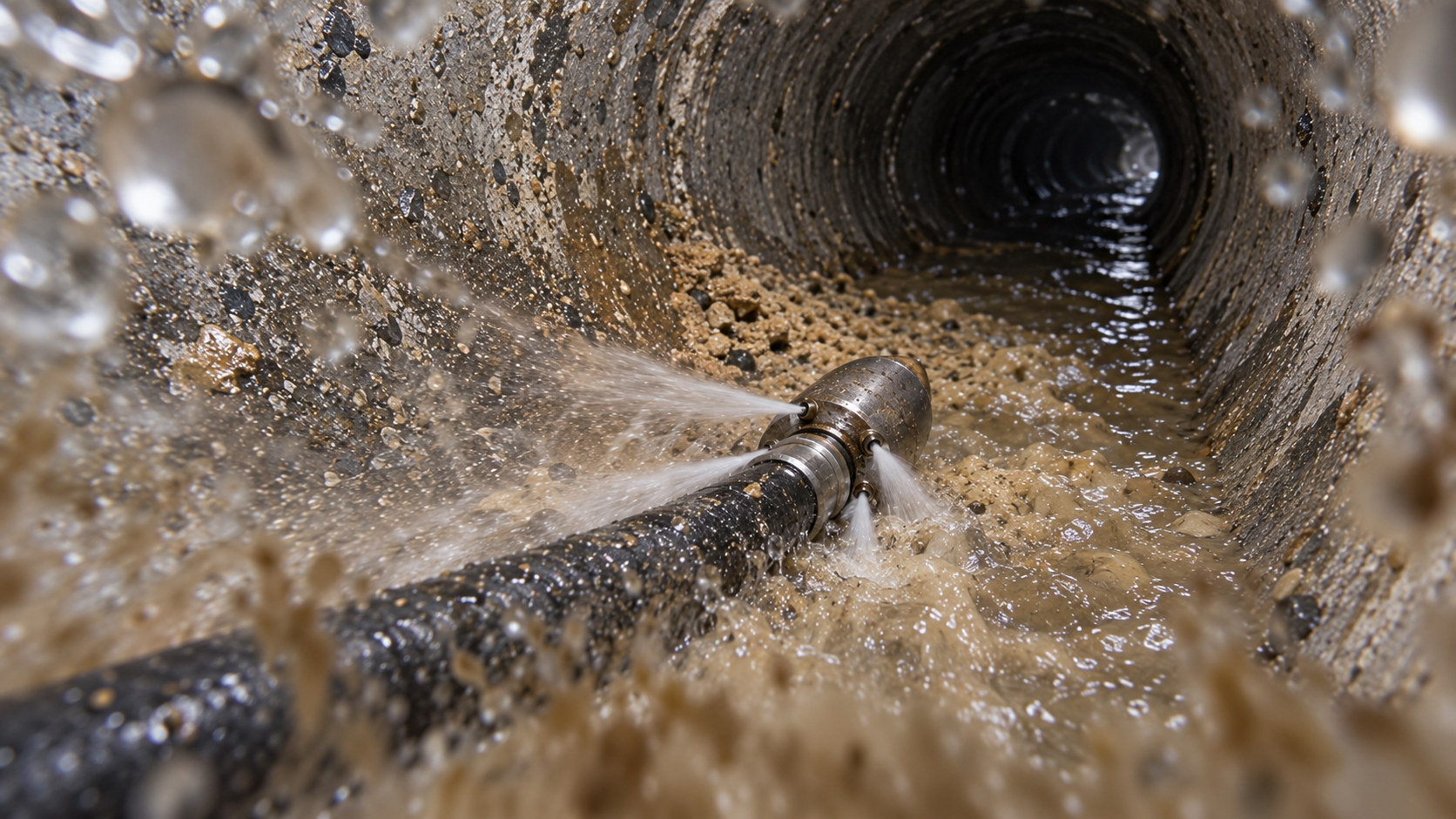
Service illustration: Rearward jets move loose sand and grit along the sewer invert.
Rearward jets move loose sand and grit along the sewer invert.

02

We clear sand and grit from the bottom of your pipe.

Sand and grit can settle along your sewer invert, taking up the lower part of the passage. Our jetting crew moves suitable sediment toward an accessible collection point, with vacuum recovery where needed.

The cleaned view exposes the invert so a follow-up camera can examine the pipe surface and any remaining accumulation.

Before removalAfter debris removal
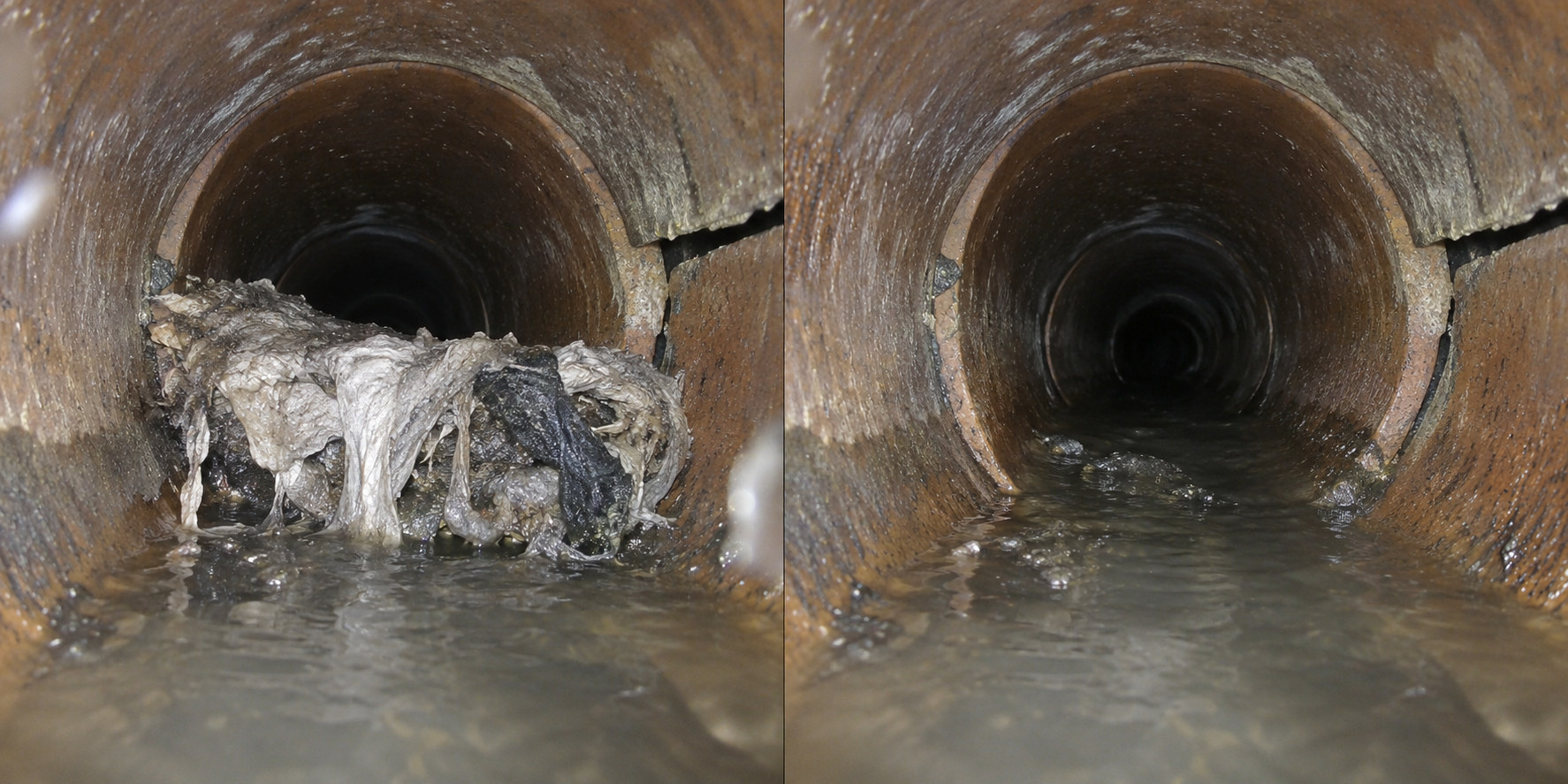
Condition illustration: wipes rags before removal at left and after debris removal at right, with the original pipe surface and joints retained.
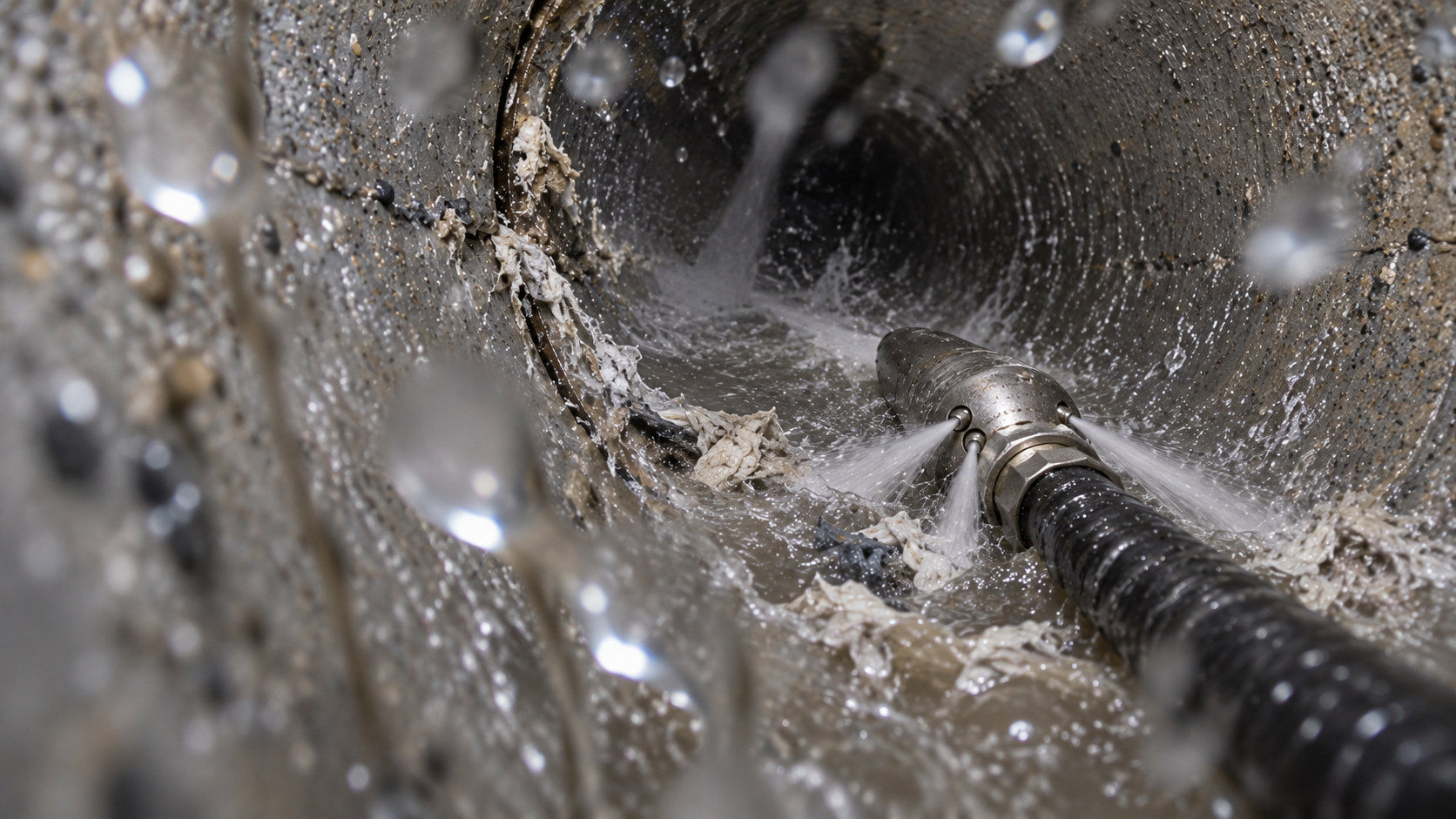
Service illustration: The nozzle flushes loosened fibrous debris; material caught at a defective joint may need further removal.
The nozzle flushes loosened fibrous debris; material caught at a defective joint may need further removal.

03

We remove the fibrous debris caught inside your sewer.

Wipes and rags can bunch together or snag at a joint or connection. Our crew addresses suitable accumulated material and recovers it where the access and cleaning method allow.

If debris keeps catching at the same location, closed-circuit television (CCTV) can show an offset joint or protruding connection. Removing the snagged material leaves that underlying condition visible for assessment.

Before removalAfter deposit removal
Condition illustration: organic sediment before removal at left and after deposit removal at right, with the original pipe surface and joints retained.
Service illustration: Water jets loosen soft sediment and carry it back through the pipe.
Water jets loosen soft sediment and carry it back through the pipe.

04

We remove soft deposits that hide your pipe surface.

Soft settled material can cover your sewer invert and obscure the wall beside it. Jetting loosens suitable deposits, and vacuum equipment recovers accumulated material from an accessible collection point.

A follow-up inspection can examine the exposed surface. Thin staining and ordinary pipe wear can remain after the obstructing deposit has been removed.

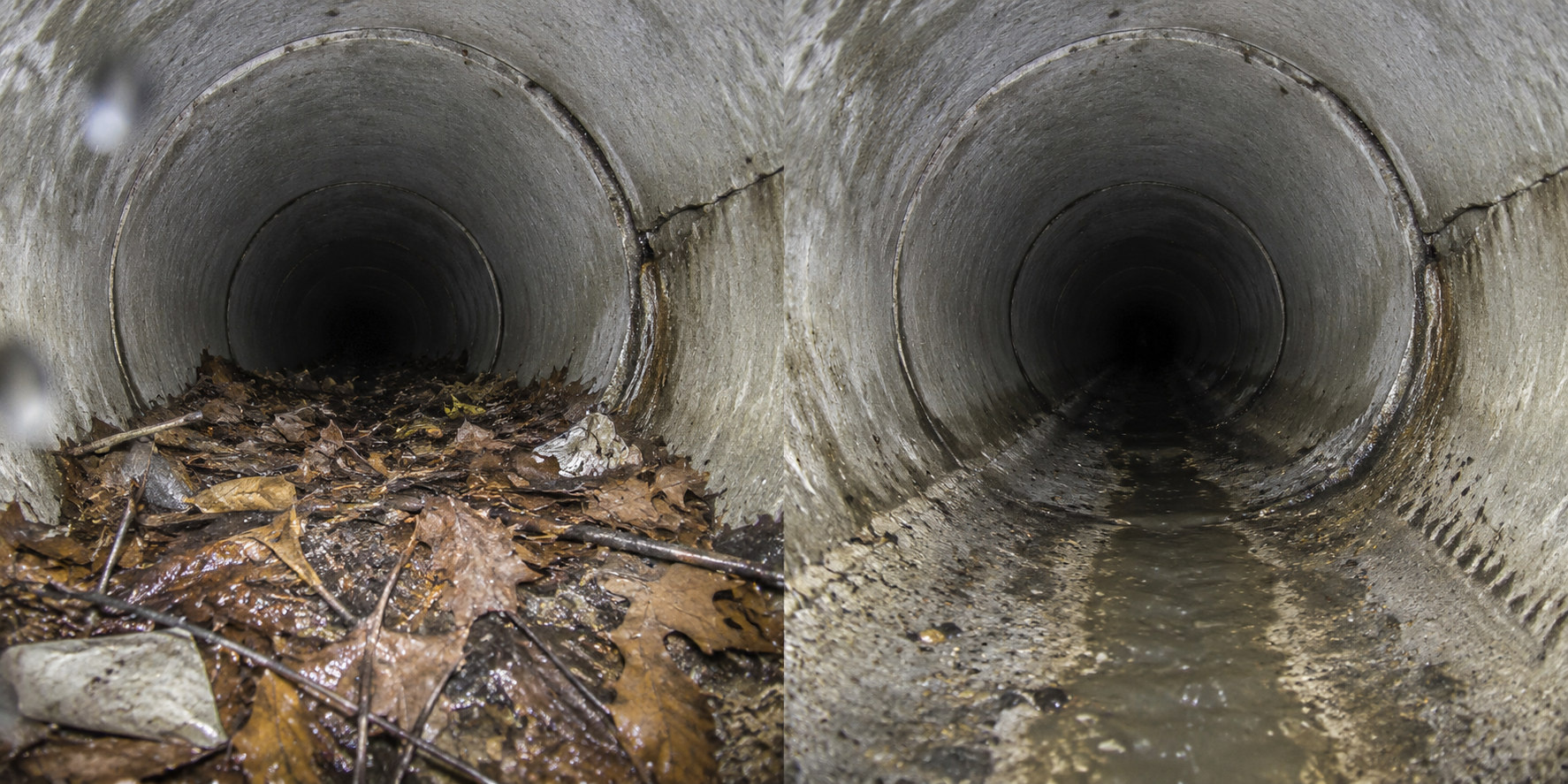
Before removalAfter debris removal
Condition illustration: storm debris before removal at left and after debris removal at right, with the original pipe surface and joints retained.
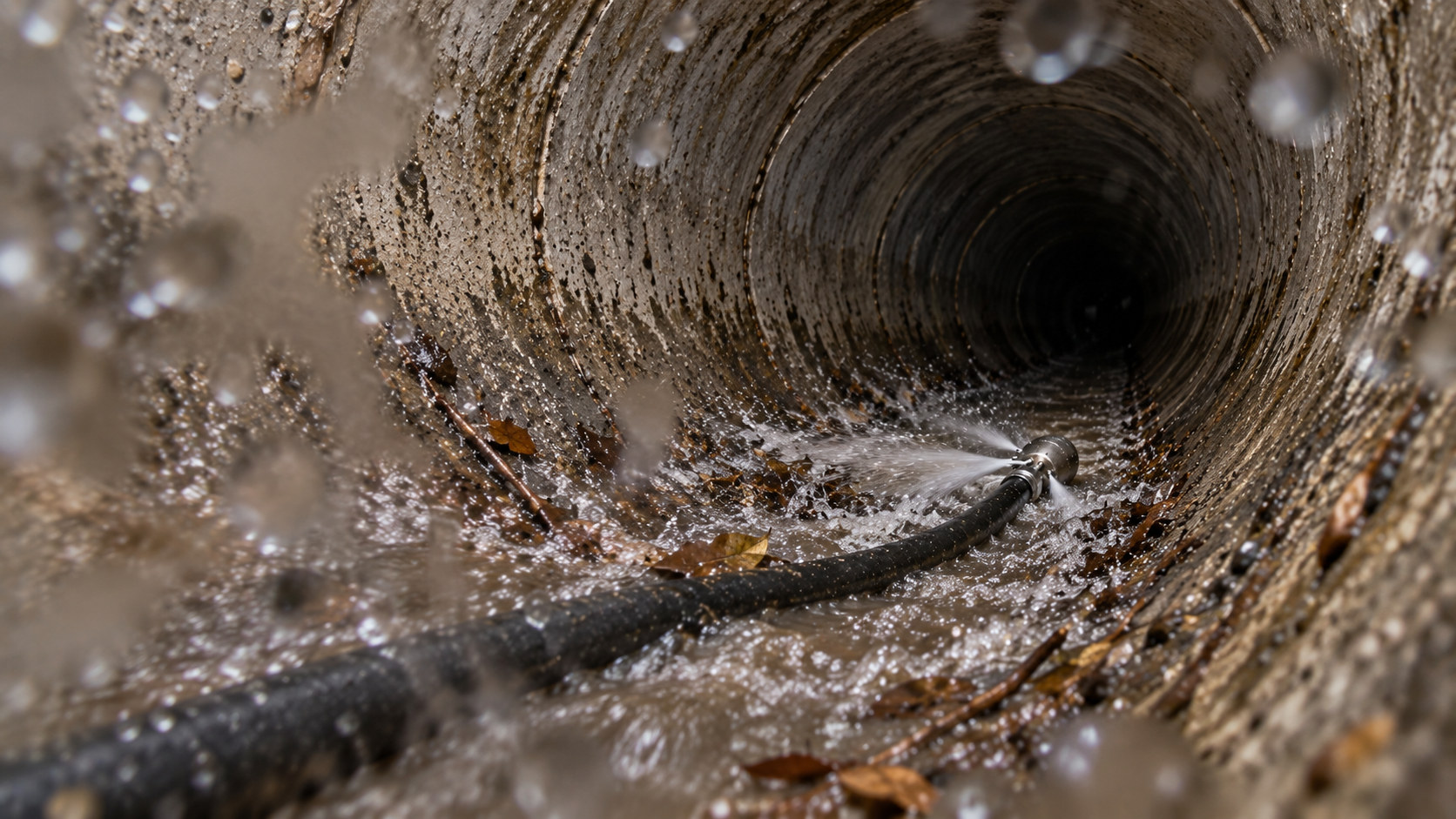
Service illustration: The nozzle flushes loose leaves, small twigs and sediment from the storm sewer.
The nozzle flushes loose leaves, small twigs and sediment from the storm sewer.

05

We clear suitable leaves and loose debris from your storm sewer.

Leaves, twigs and litter can collect with sediment inside your storm sewer. Our crew addresses the accumulated material and plans recovery around the accessible openings and debris involved.

The cleared passage can then be checked for remaining material or visible damage. Large or fixed obstructions may require a different removal method.

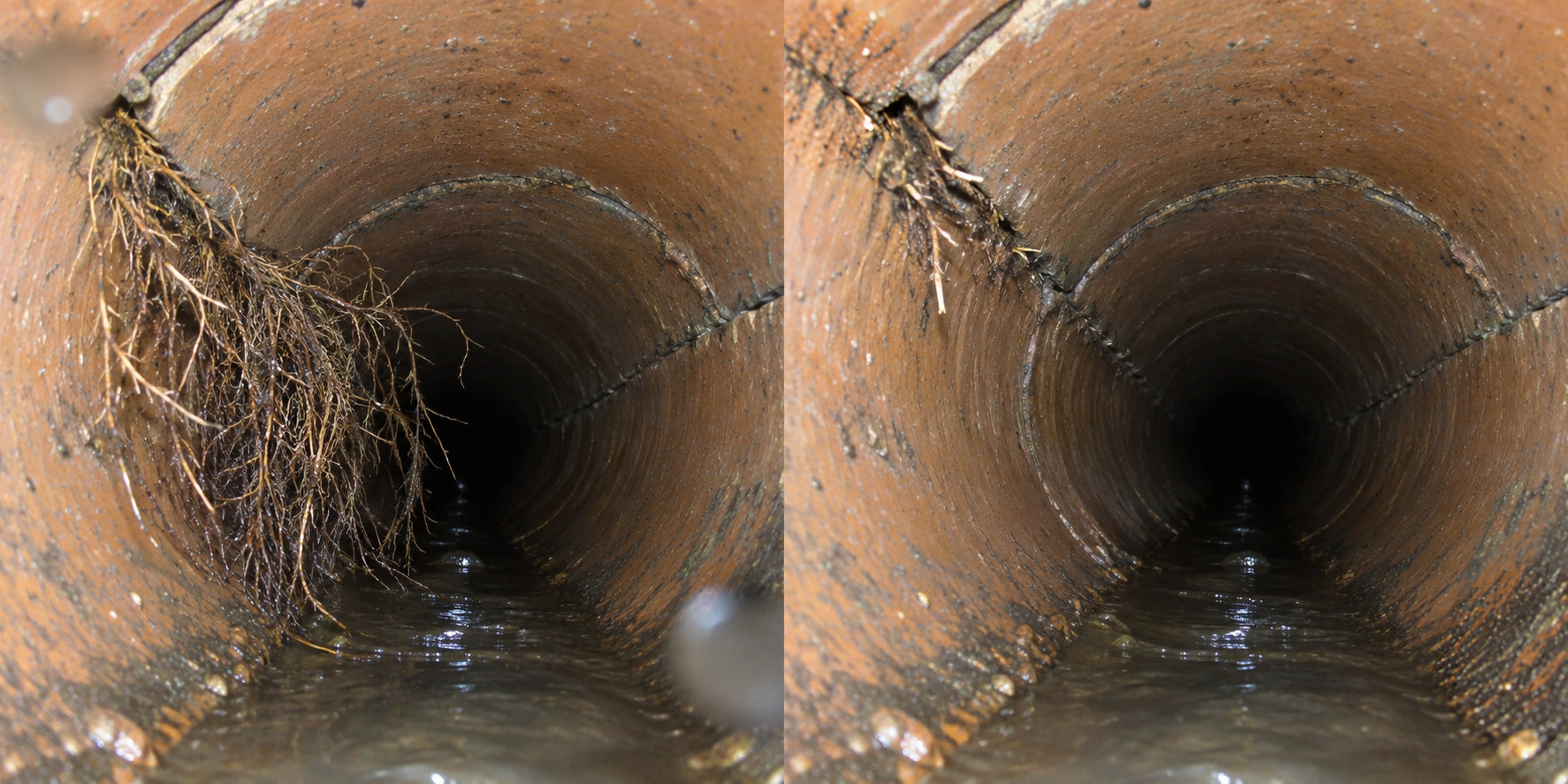
Before removalAfter root cutting
Condition illustration: roots before removal at left and after root cutting at right, with the original pipe surface and joints retained.
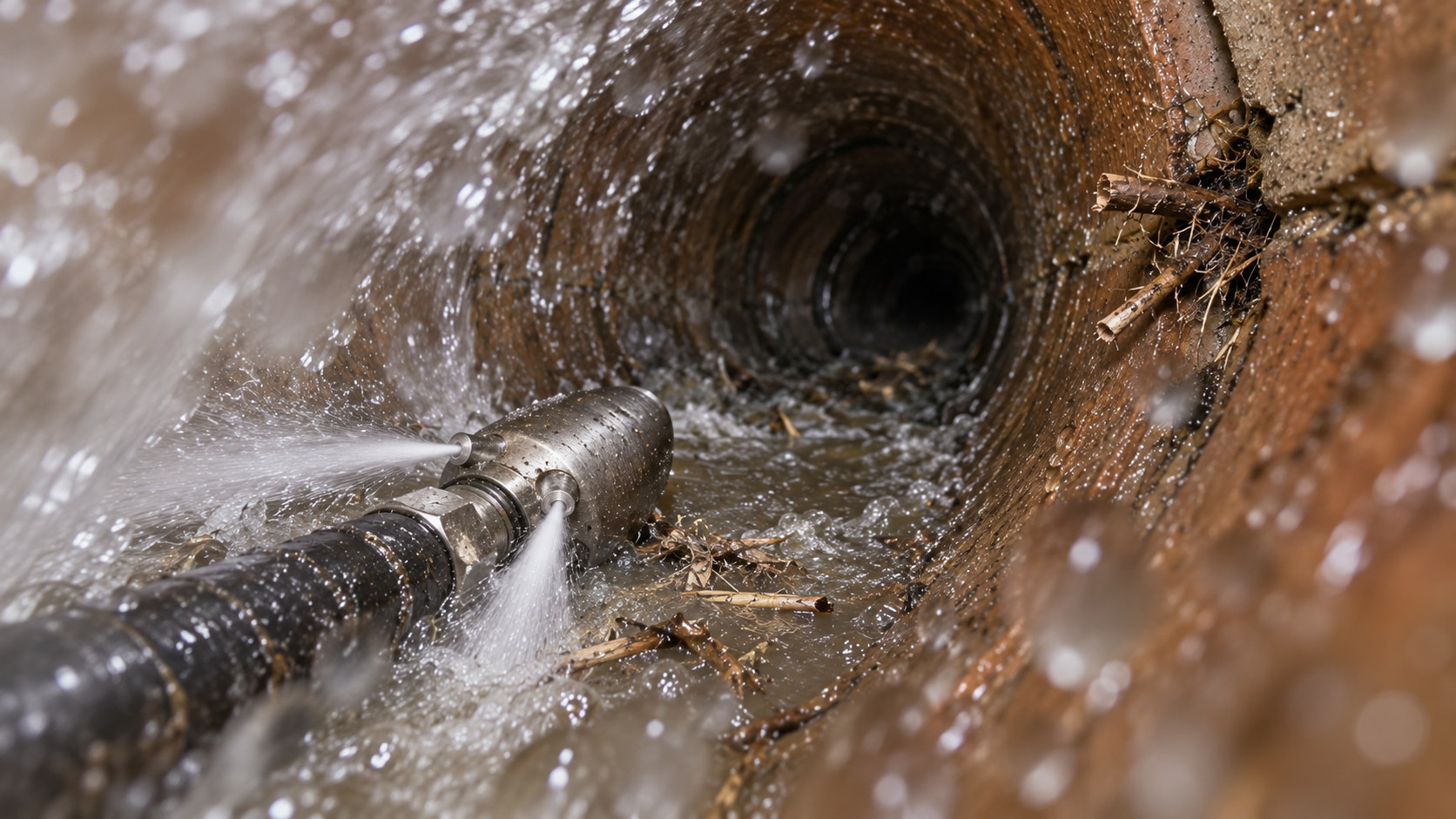
Service illustration: After root cutting, the nozzle flushes severed fragments. The entry joint still needs assessment.
After root cutting, the nozzle flushes severed fragments. The entry joint still needs assessment.

06

We cut intruding roots and inspect the joint they entered.

Roots entering your sewer through a joint can extend across the passage and catch debris. Our crew uses the cutting method suited to the root growth, surrounding pipe condition and access.

In the inspection comparison, roots have been cut back while the entry joint remains. Cleaning and root cutting do not seal that joint. CCTV helps identify where a separate repair assessment is needed.

Before removalAfter specialized cutting
Condition illustration: hard deposits before removal at left and after specialized cutting at right, with the original pipe surface and joints retained.
Service illustration: After specialized cutting, the nozzle flushes loosened mineral fragments. Ordinary jetting does not remove every hardened deposit.
After specialized cutting, the nozzle flushes loosened mineral fragments. Ordinary jetting does not remove every hardened deposit.

07

We use robotic cutting when deposits need more than ordinary jetting.

Hard deposits can remain attached to your pipe after loose material is cleared. Our camera-guided robotic cutting crew can address suitable hardened obstructions with the appropriate tooling.

This example shows a reduced obstruction after specialized cutting. The worn pipe and joint remain. Robotic cutting is scoped separately from ordinary jetting.

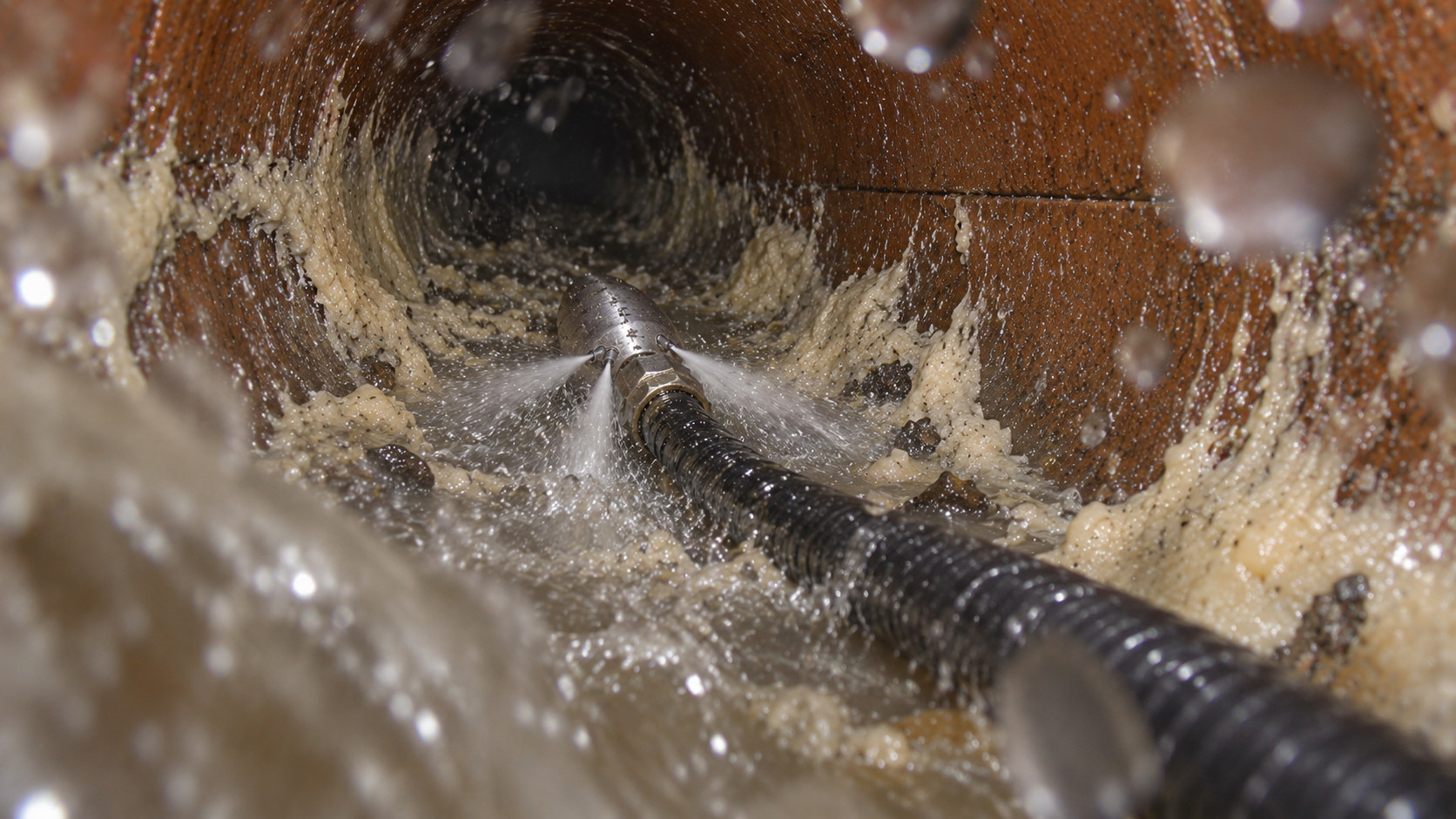
Service illustration: a hose-connected flushing nozzle directs rearward water jets through loosened grease inside a clay sewer.
Rearward water jets move loosened material back along the sewer. Vacuum equipment retrieves accumulated material at an accessible recovery point.Service illustration

Our televising crew checks the pipe that cleaning exposes.

Before cleaning, closed-circuit television (CCTV) can show the obstruction and the surrounding pipe where the camera has access. Heavy deposits, high water or a blocked passage can limit that first view.

After cleaning, our IBAK camera systems can record the reachable run, including the joints, connections and pipe wall that deposits concealed. Comparing the same locations helps show what was removed and which visible defects or obstructions remain.

When lining follows, we clean the affected run and identify material that needs further cutting. If a joint is damaged or roots keep entering, the inspection can support a separate repair assessment. We define CCTV coverage and the agreed footage and reports with your cleaning project.

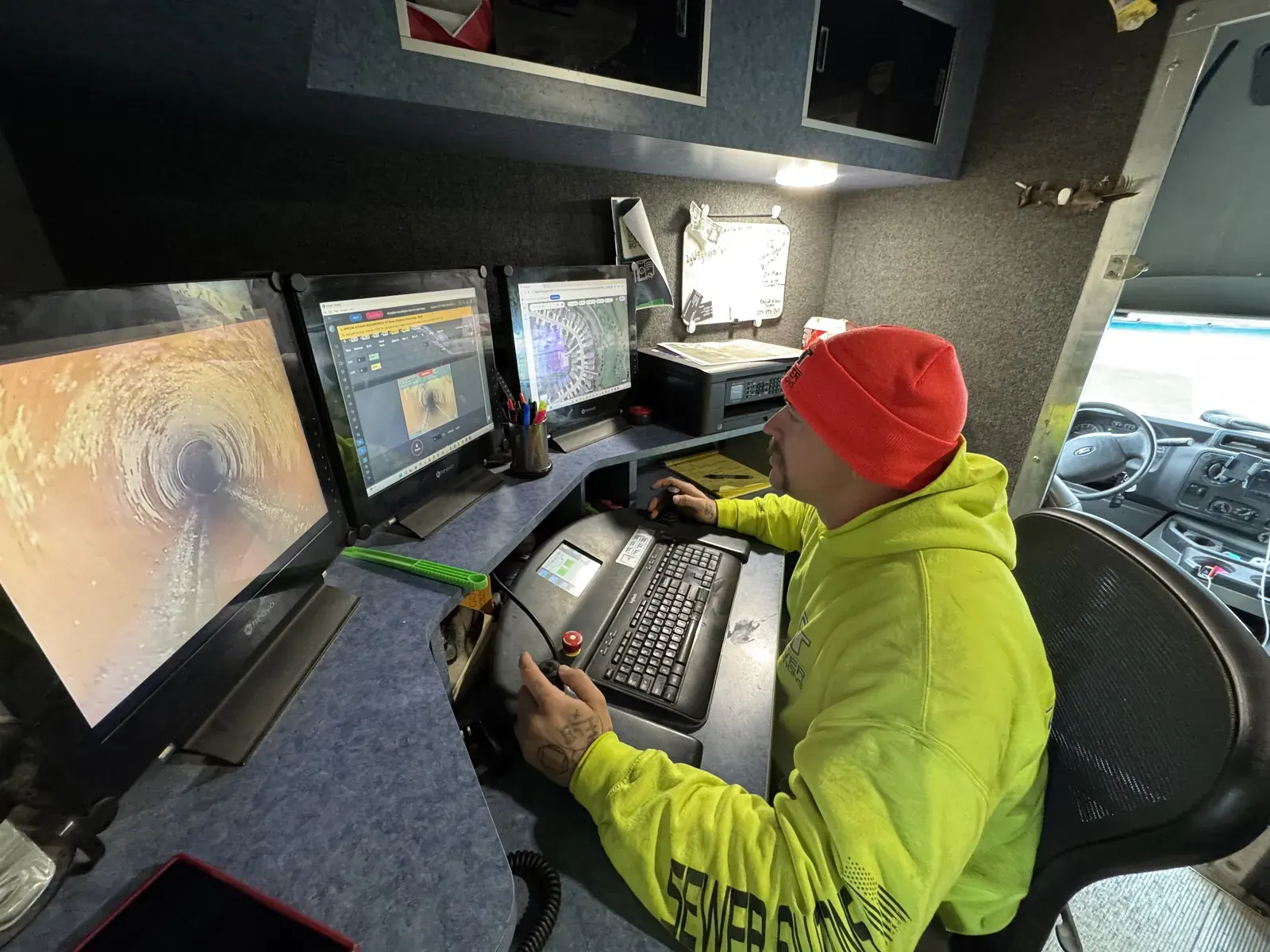
A CIT operator reviews sewer inspection video at the control console inside a televising truck.
Our operator examines the pipe interior on the inspection monitors.
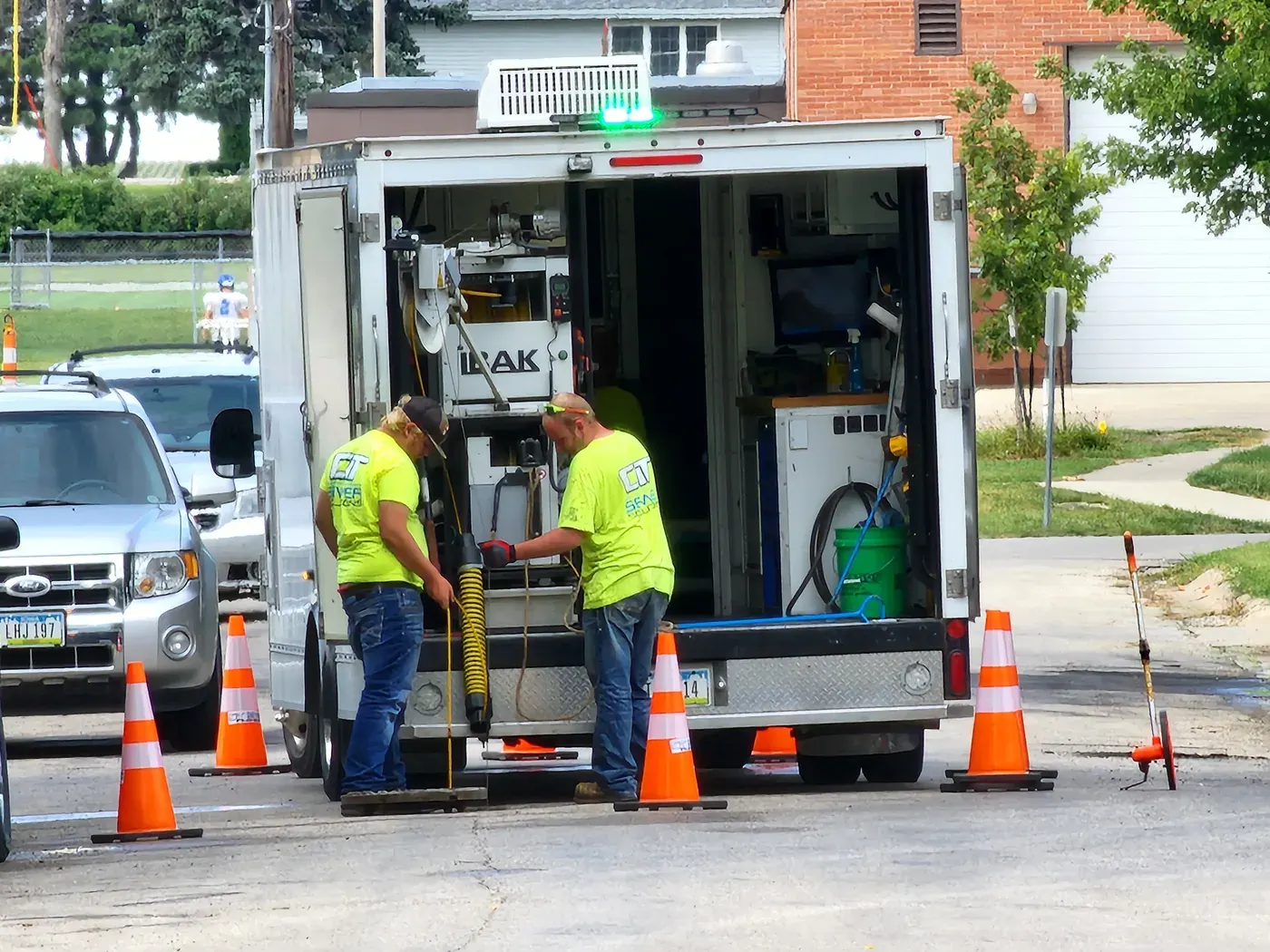
Two CIT crew members handle inspection equipment beside an open manhole and an IBAK reel at the rear of a televising truck.
Our field crew handles inspection equipment at the manhole beside the televising truck.

How our cleaning crew works

We plan the cleaning, remove deposits and check your sewer.

  1. We identify the sewer runs and structures to clean.

    We review the affected assets, access, deposits, flow, and recovery arrangements with your staff.

  2. We clean the affected run or structure.

    Our crew uses the appropriate jetting and vacuum equipment and identifies remaining obstructions or access limits.

  3. We check the cleaned sewer for remaining deposits.

    We check the cleaned area against the planned work. CCTV or preparation for rehabilitation follows where your project includes it.

01

We clean your large-diameter sewers and treatment structures.

A CIT combination truck and crew working from the street beside a support vehicle.
Our Vactor truck and crew work beside the street with the vacuum boom deployed.

We provide large-diameter sewer cleaning and remove accumulated material from your lift stations, digesters, and clarifiers.

We plan work at these assets around your facility's access, sewer flow, operating and isolation requirements, and the material to be recovered. Recovery and disposal arrangements are part of the cleaning scope.

02

We provide one-time and scheduled cleaning for your sewers and treatment structures.

You can request cleaning for an affected sewer run or structure, or discuss scheduled cleaning of selected assets. We define the work around the deposits, access, recovery needs, and any inspection or rehabilitation that follows.

For broader system coverage, our annual maintenance program combines cleaning, PACP-coded CCTV, and a findings review. We clean and inspect a planned portion of your collection system each year through that separate program.

01

Find your project location in our service area.

We serve municipal, commercial and institutional sewer projects in Iowa, Minnesota, Missouri, Nebraska, Arkansas and Colorado. Tell us where your sewer is located and which assets need inspection, maintenance or repair so we can discuss the project requirements and scheduling.

Our local sales territories cover all 99 Iowa counties, six eastern Nebraska counties and Union County, South Dakota. The territory pages list their communities, counties and CIT contacts. For projects elsewhere in our six-state service area, use the full service-area page.

Our jetting capability

We put high-pressure water to work inside your sewer.

Grease clings to your pipe walls. Grit and sediment collect along the bottom. Our crews use targeted jetting to break up deposits and move loosened material back for recovery, clearing restrictions that can block flow or keep an inspection camera from getting through.

We use jet direction to loosen deposits and carry them out.

Jetting technology

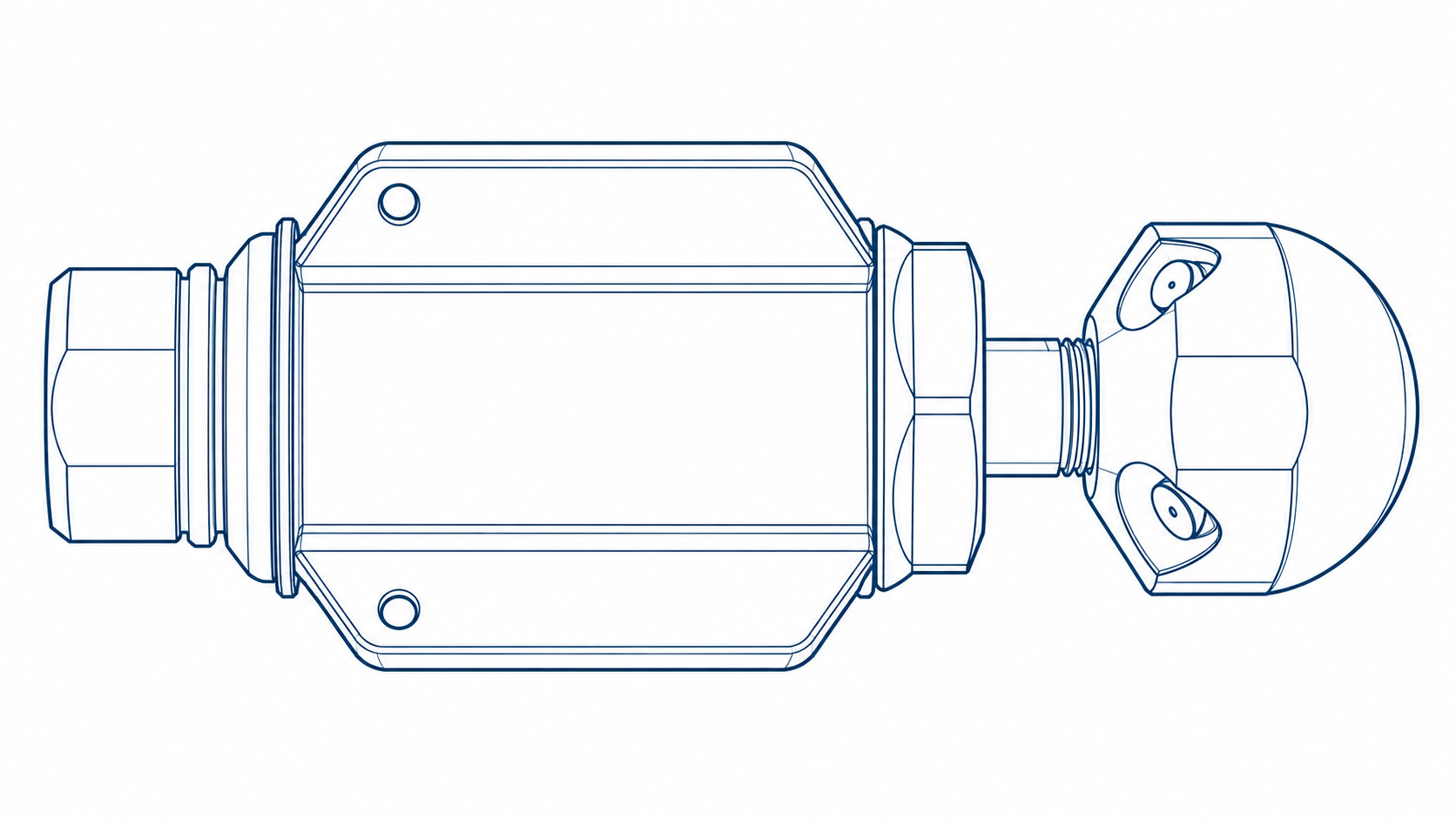
01 / Side elevation
Dark-blue orthographic side illustration of a Warthog WG Classic nozzle, showing the rear inlet, stabilizer body, shaft and rounded rotating head.
9 in. / 230 mm

Rear-facing jets help move the hose through your sewer and flush loosened material back toward our recovery point.

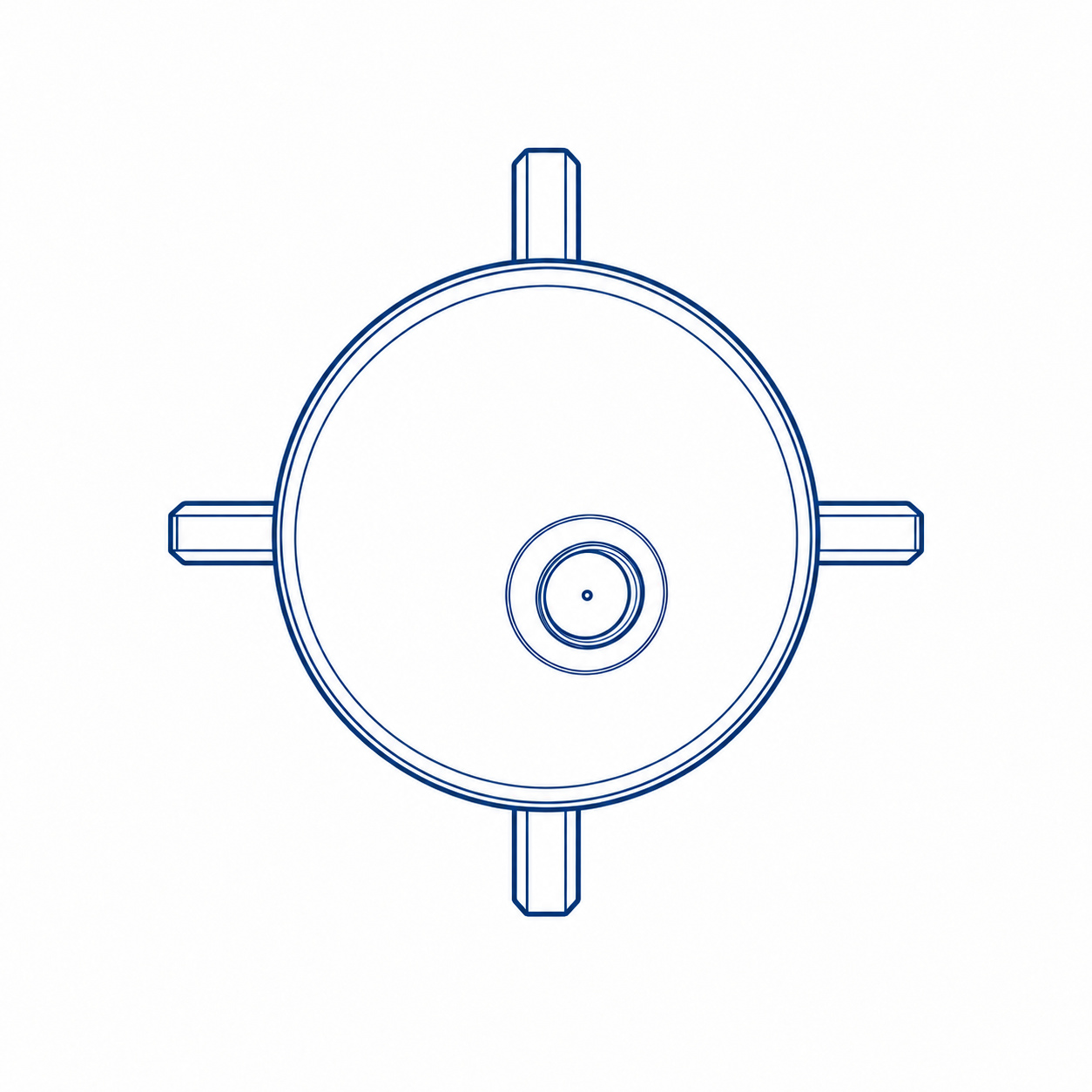
02 / Front elevation
Dark-blue front elevation of the same nozzle, with its single forward jet opening and four stabilizer fins visible behind the head.
5 in. / 130 mm

A forward-directed jet attacks deposits ahead of the nozzle. A rotating head sweeps the water across the pipe interior.

Illustrated nozzle: Warthog WG Classic WG-1. Dimensions describe this reference model; we select equipment for your pipe and blockage.

01

We break up the buildup restricting your pipe.

Our crew selects the nozzle and water pressure for the material in your sewer. Concentrated jets loosen deposits, while rotating heads spread the cleaning action across the pipe interior. We can address buildup along the walls as well as material directly ahead of the nozzle.

02

We carry loosened debris back for recovery.

Water volume carries grit, sediment and loosened grease toward access. Rear-facing jets provide pulling force and flushing action, and our Vactor vacuum equipment recovers accumulated material where needed. We plan that recovery with the cleaning so the debris can be removed from your system.

03

We match the cleaning power to your sewer.

Your pipe diameter, condition and obstruction guide our nozzle selection and water delivery. We use suitable cutting methods for roots and our robotic equipment for hardened obstructions that need more than jetting. This prepares the affected run for your inspection or rehabilitation.

Plan cleaning for your sewer or facility.

Can we request cleaning without an annual maintenance program?
Yes. We provide cleaning for affected sewer runs and structures as a separate service. You can request a one-time job or discuss scheduled cleaning. Our annual maintenance program combines planned cleaning, CCTV inspection, and a findings review.
What material can you remove from our sewer?
We remove suitable grease, grit, sediment, and other accumulated deposits. We also provide root and grease cutting and large-diameter cleaning. Your pipe condition, the material, and access determine the method. Hardened obstructions and protruding connections may require our robotic cutting crew.
Do you clean lift stations, digesters, and clarifiers?
Yes. We remove accumulated material from these assets. We discuss your operating and isolation requirements, access, material characteristics, and recovery and disposal arrangements when defining the work.
Does cleaning include a CCTV inspection?
We can include CCTV when your project needs a view of the cleaned pipe or investigation of a recurring restriction. We define that inspection with your cleaning work. The separate annual maintenance program includes its advertised cleaning, PACP-coded CCTV findings, and findings review.
Will cleaning repair damage in our sewer?
Cleaning removes suitable deposits; it does not structurally repair your pipe or seal a damaged joint. CCTV can show visible damage and remaining obstructions after cleaning. Our repair or robotic cutting crews can address suitable findings through separately defined work.
What should we send with a cleaning inquiry?
Tell us your organization, project location, affected runs or structures, known material or recurring concern, and timing. Include available inspection records and mention access or operating restrictions. You can contact us with the problem before deciding which cleaning method is needed.

Discuss your sewer cleaning.

Discuss cleaning for your sewer mains and structures.

Tell us where deposits are causing problems, which assets need cleaning, and whether inspection or rehabilitation will follow. We can discuss the cleaning and recovery work your project needs.

Call 515-434-2248