
CIT Sewer Solutions
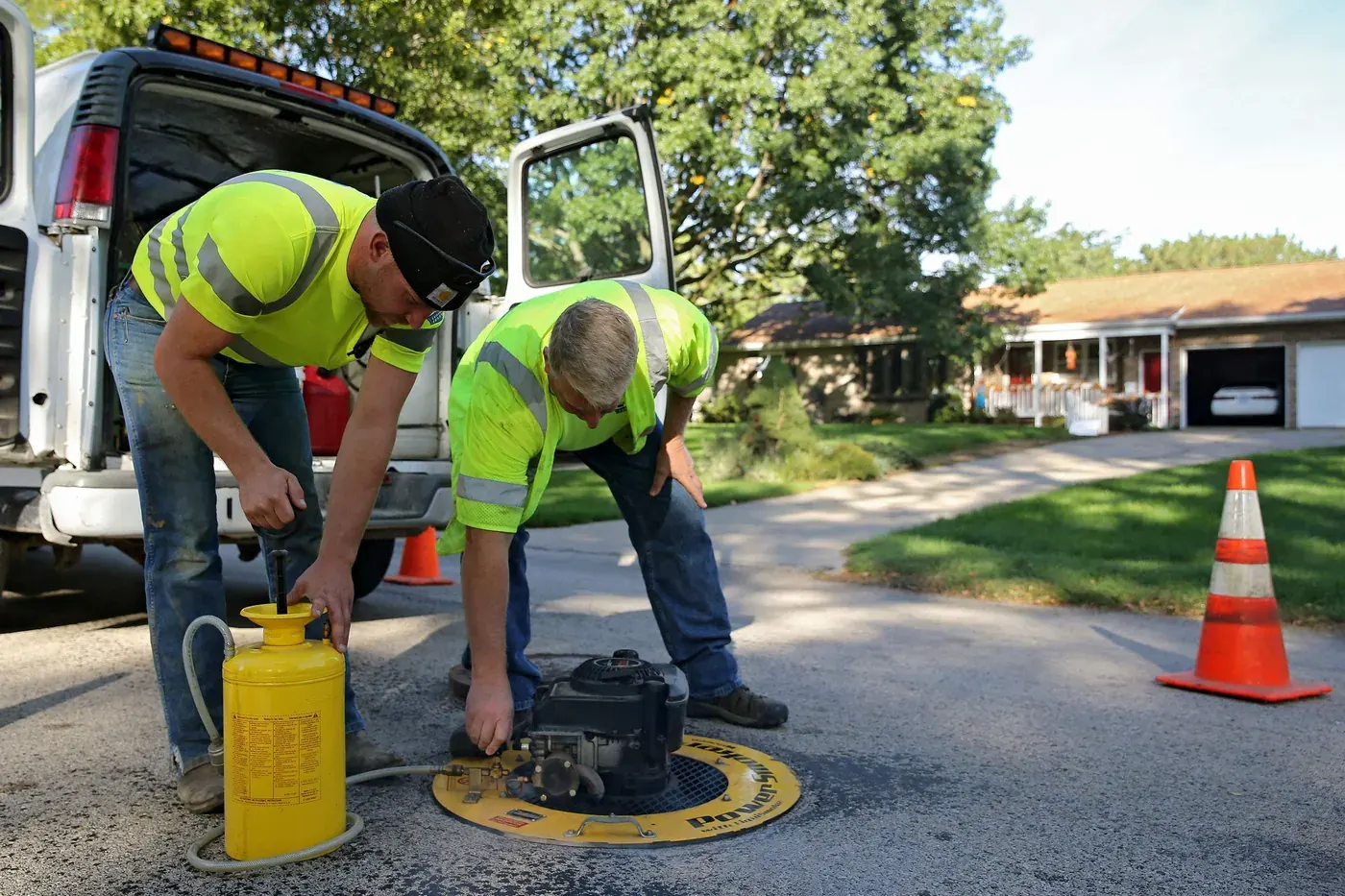
Two CIT technicians operate a smoke-testing blower at a manhole in a residential street.

Planning guide

How does smoke testing find where rainwater enters your sanitary sewer?

Smoke testing sends test smoke through a selected section of your sanitary sewer while a crew watches where it comes out. Smoke that appears at a roof drain, a storm connection, or the ground above a damaged pipe marks a possible path for rainwater or groundwater to enter that sewer. Dye testing and back smoking then check the suspected locations before your city plans a repair.

01

What is the difference between inflow and infiltration?

Inflow is rainwater that enters your sanitary sewer through a direct route, such as a roof drain, a sump connection, or a storm connection. Infiltration is groundwater that seeps in through defects, such as a cracked pipe, a damaged joint, or a leaking manhole wall. Together they are called inflow and infiltration, or I&I. Both add clear water to the flow your collection system carries.

02

What does the crew record during a smoke test?

Our crew introduces test smoke into the selected area of your sanitary sewer and observes where it emerges. We record each location so your staff can see which drains, connections, and sewer segments need dye testing, back smoking, or camera inspection.

A smoke test screens for possible entry paths. Smoke at a location does not measure how much water enters there, and an area with no visible smoke can still have defects.

03

How do dye testing and back smoking check a suspected connection?

In a dye test, our crew introduces a tracer dye at the suspected source and watches for it at a receiving point in your sewer. Dye that arrives shows that the two are connected. Back smoking tests one suspected connection from a nearby access point to trace its route.

04

Why monitor flow before smoke testing?

Temporary flow monitoring helps your staff choose which sub-basins to smoke test first. We install Eastech iTracker level sensors at the manholes that separate your sub-basins and compare their readings with rainfall. The sub-basins whose levels rise most in wet weather become the priority areas for smoke testing.

05

What does your city arrange before a smoke test?

Test smoke can appear at buildings connected to the section of your sewer being tested. We plan resident notices, building access, and fire department coordination with your staff before testing begins.

06

What happens after smoke testing identifies an entry path?

Smoke testing, dye testing, and flow monitoring show where unwanted water may enter your sanitary sewer. They do not remove it. A damaged joint, lateral connection, or manhole needs a separate repair. A direct connection such as a roof drain may need to be corrected by the owner responsible for it.

This guide was last updated on November 12, 2026.

Ask us about investigating inflow and infiltration in your sanitary sewer.

What is a sanitary sewer evaluation survey?
A sanitary sewer evaluation survey, or SSES, is a study of where unwanted water enters your collection system. It can combine flow monitoring, smoke testing, dye testing, manhole inspection, and closed-circuit television (CCTV) inspection.

Discuss your investigation

Plan a smoke testing investigation for your sanitary sewer.

Tell us your project location, the area with wet-weather flow increases, and any flow records you have.

Call 515-434-2248