
CIT Sewer Solutions
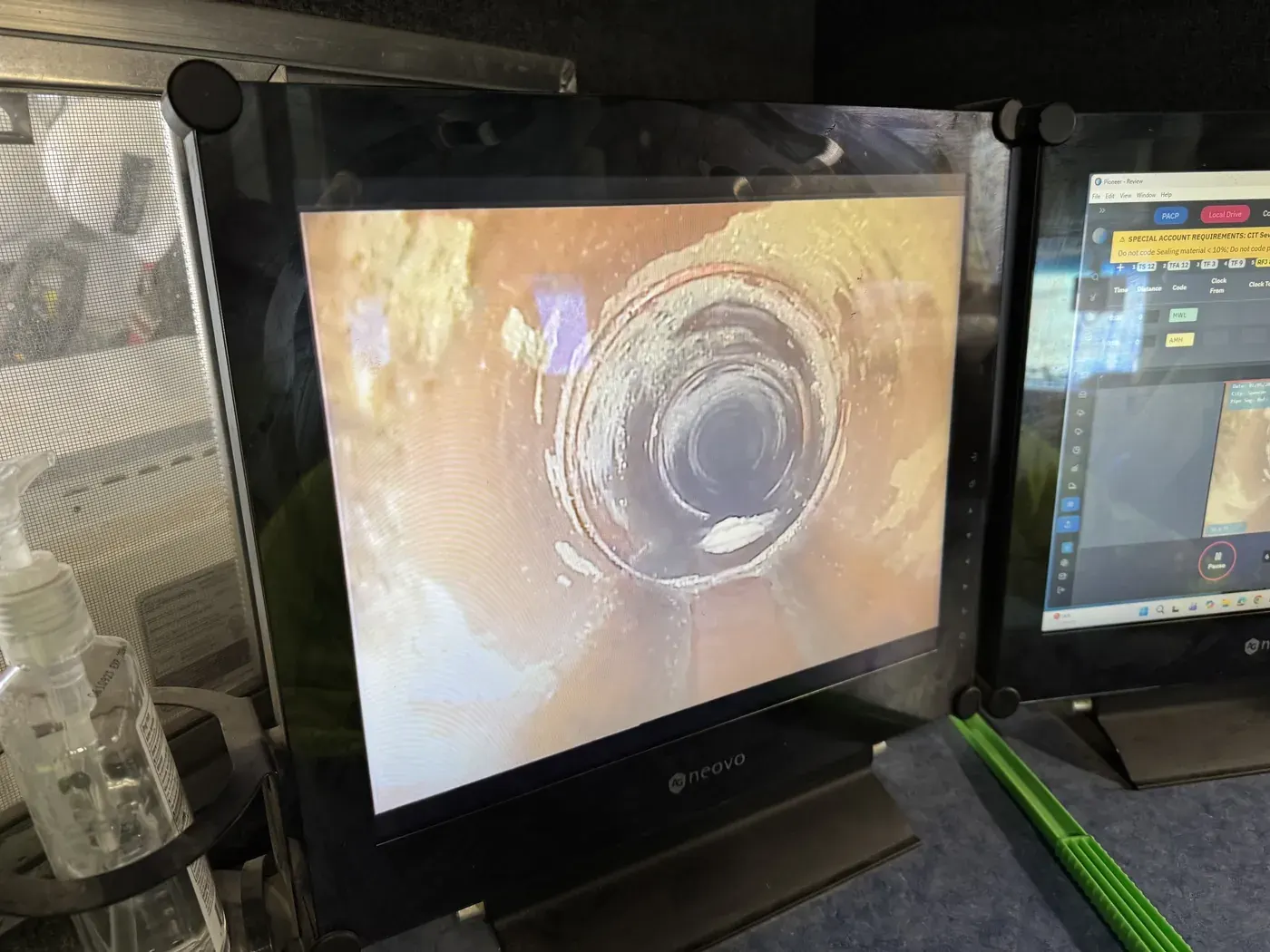
Inspection video of a pipe interior displayed on the monitor inside a CIT televising truck.

Planning guides

These guides answer the planning questions your city asks before a sewer project.

Each guide explains one inspection, cleaning, or repair decision for your collection system and links to the CIT service page for that work.

01

What is a PACP sewer inspection, and what does it record in your sewer mains?

A Pipeline Assessment Certification Program (PACP) inspection is a camera inspection of your sewer main in which the operator records each visible defect with a standard code. PACP assigns each coded defect a condition grade from 1 to 5.

02

How often should your city clean and televise its sewer mains?

No single interval fits every collection system. Our annual maintenance program can be set up as a five-year cycle that cleans and televises about 20 percent of your collection system each year.

03

How does smoke testing find where rainwater enters your sanitary sewer?

Smoke testing sends test smoke through a section of your sanitary sewer while a crew watches where it comes out. Those locations mark possible paths for rainwater or groundwater to enter.

04

Does your damaged sewer main need a point repair, a connection liner, or full UV CIPP lining?

A cured-in-place pipe (CIPP) point repair treats one isolated defect in your sewer main, a connection liner treats a lateral junction, and full-segment lining cured with ultraviolet (UV) light rehabilitates a longer deteriorated run.

05

What is the difference between a MACP Level 1 and a Level 2 manhole assessment?

A Manhole Assessment Certification Program (MACP) Level 1 assessment records the general condition of each manhole. A Level 2 assessment records each component in detail and codes its defects for rehabilitation planning.

06

Plan your CCTV inspection around the sewer problem you need investigated.

A closed-circuit television (CCTV) inspection starts with the location of your sewer and the reason for inspecting it: recurring restrictions, damage needing repair, or completed work needing a camera check.

Discuss your project

Discuss your sewer project.

Tell us where your sewer project is located and what you need inspected, cleaned, or repaired.

Call 515-434-2248