
CIT Sewer Solutions
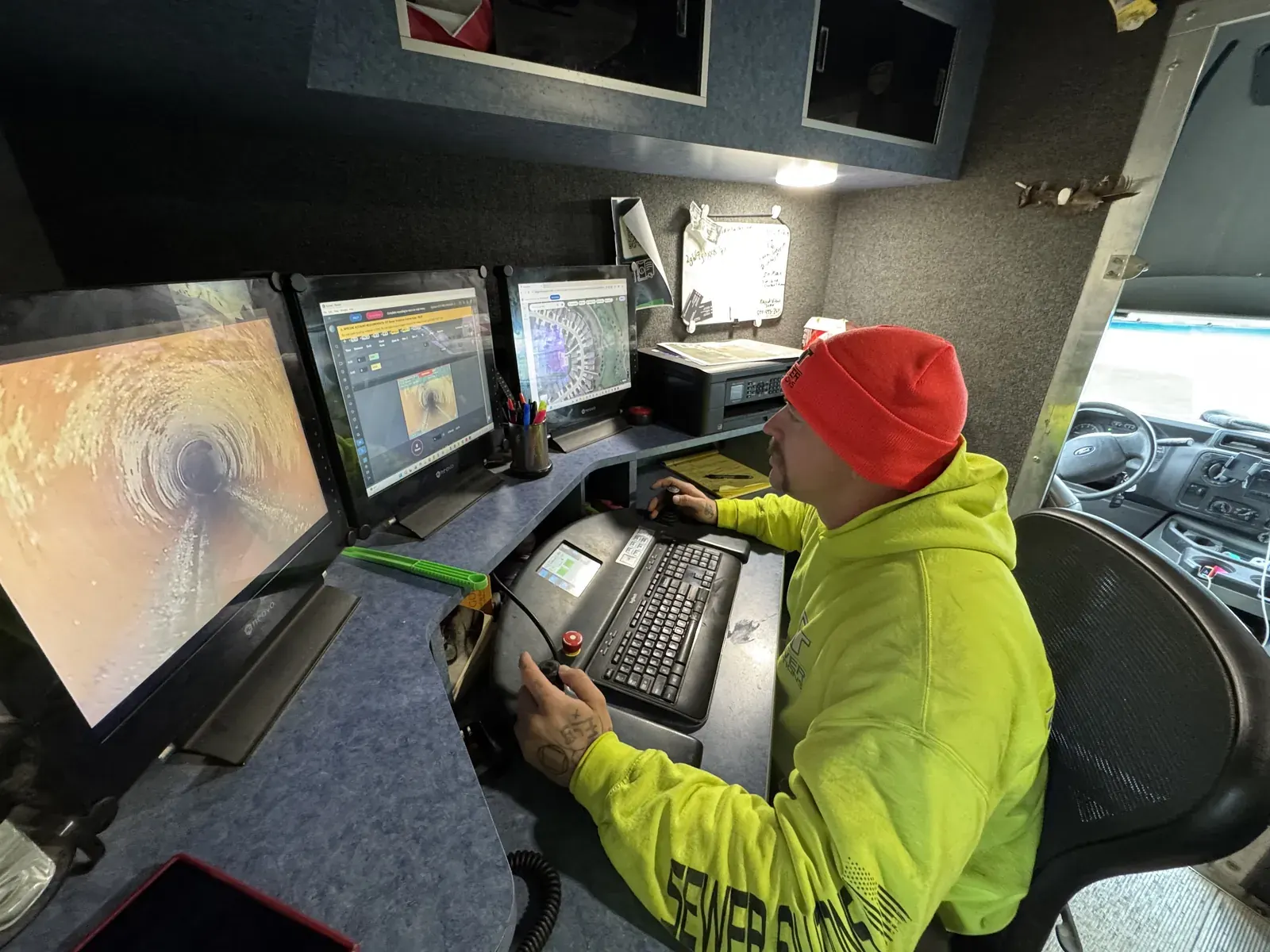
A CIT operator reviews live sewer inspection video at the control console inside a televising truck.

Planning guide

What is a PACP sewer inspection, and what does it record in your sewer mains?

A PACP inspection is a camera inspection of your sewer main in which the operator records each visible defect with a standard code. PACP stands for Pipeline Assessment Certification Program. NASSCO, the National Association of Sewer Service Companies, publishes the standard. Because every coded inspection uses the same defect names and condition grades, your staff and your engineer can compare one pipe segment with another.

01

How does the operator code what the camera sees in your sewer main?

Our televising crew moves an IBAK camera through your sewer main from one manhole to the next. In a PACP-coded inspection, the operator records each observation with its PACP code and its distance from the starting manhole.

Structural codes describe damage to your pipe, such as cracks, fractures, broken pipe, holes, and deformation. Operation and maintenance codes describe conditions that interfere with flow, such as roots, deposits, infiltration, and obstructions. Construction codes record features such as the taps where your laterals connect.

02

What do PACP condition grades 1 to 5 mean?

PACP assigns each structural defect and each operation and maintenance defect a condition grade from 1 to 5. Grade 1 is a minor defect. Grade 5 is the most significant. The grades for one pipe segment are combined into ratings that your staff can use to rank the segments in your collection system.

A grade describes the condition the camera recorded. It does not design a repair, and it does not measure your pipe's structural or hydraulic capacity.

03

Who performs PACP-coded inspections at CIT?

Our televising crew includes PACP-certified inspection professionals. NASSCO certifies individual inspectors, not companies.

04

What does your city receive after a PACP-coded inspection?

Your inspection can include video, written observations, still images, and the distance of each observation along the inspected run. Our annual maintenance program includes PACP-coded observations and a review of them with your staff.

When you request pricing for a single inspection, tell us that your project requires PACP coding and which report format your engineer needs.

05

What can a PACP inspection not show?

A camera records the conditions it can reach and see. Flow, bends, deposits, and obstructions can limit how far it travels through your sewer main. A coded inspection does not prove that an unseen section of your pipe is sound.

Deposits can hide your pipe wall, so your sewer main may need cleaning before the inspection.

06

Which standards cover your laterals and manholes?

PACP covers sewer mains. NASSCO publishes two companion standards. LACP, the Lateral Assessment Certification Program, covers laterals. MACP, the Manhole Assessment Certification Program, covers manholes.

Our lateral launch camera records video of your accessible laterals. PACP coding applies to your sewer mains.

This guide was last updated on November 12, 2026.

Ask us about inspecting your sewer mains.

Where does CIT perform sewer inspections?
We inspect sewer mains for municipal and commercial projects in Iowa, Minnesota, Missouri, Nebraska, Arkansas, and Colorado.

Discuss your inspection

Discuss a PACP-coded inspection of your sewer mains.

Tell us your project location, the sewer segments you need inspected, and the report format your engineer requires.

Call 515-434-2248